
Wilma’s Lavender
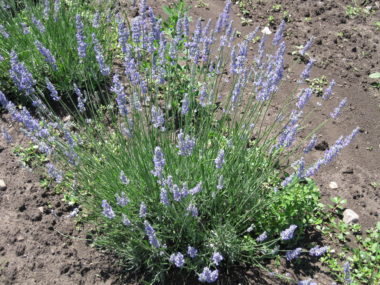
Wilma’s Five Rows of Lavender
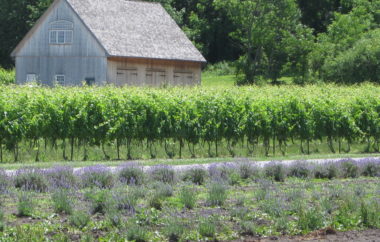
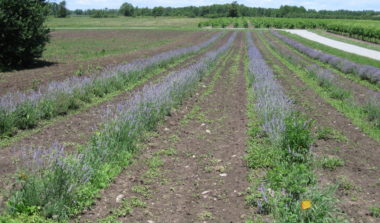
Vineyard Update
It dawned on me today, as I hurriedly thinned Pinot Gris in the midst of an earthquake, that I hadn’t given a thorough vineyard update in a while. So here goes…
Mother nature is two weeks ahead. I’m three weeks behind. This good news / bad news situation is the familiar refrain I’ve heard in talking to many grape growers throughout the peninsula. We’ve seen a boon of growth in all vines over the last couple of weeks, leaving us scrambling to keep up with the expedited hand labour chores. Adequate rainfall, heat, and blistering sun are making my vines very happy, but leaving me a little worried. Disease pressure has been low to this point (kiss of death) but the current humid conditions will challenge even the best of viticultural practices.
The accelerated growth creates the need to shoot-thin and shoot-position all vines before we are able to start hedging. As always, vine vigour was particularly problematic in our Shiraz blocks, so I targeted them first. After two weeks of what felt like hacking through a rainforest with a dull machete, I was happy to kiss the Shiraz good-bye and move on to the more manageable Cabernet Sauvignon. We are well through bloom in all varieties, and very close to berry touch stage in the Pinot Gris. Air flow through the canopy is critical at this stage, as is fruit exposure for optimum fungicide penetration.
I’m happy to report that the young Pinot Noir vines we planted last season are doing very well, with less than 5% vine failure. In the spirit of Father’s Day, I give my dad all the credit for these thriving vines. It was he who ploughed the field ad nauseam to his own exacting specifications, he who sat vigil through many winter and spring evenings waiting to fire up the windmill, and he who artfully maneuvered the grape-hoe around each baby vine with the deft touch of a surgeon. Judging by a couple of the catastrophic first year fields I’ve witnessed while out consulting this year (upwards of 60% vine death), I really believe that the use of the windmill combined with proper site selection and field preparation helped save our bacon.
PS: I send a special thank-you and congratulations to Insite Design for designing an Ontario Wine Awards silver medal winning wine label that still makes me proud every time I slap one on a bottle!
2007 Cabernet Sauvignon
I want to personally thank all the people who made the trek to our first ever Customer Appreciation Weekend! It was great to catch up with those we hadn’t seen in a while and also meet some new friends along the way. We decided to give people a sneak preview of upcoming Five Rows releases including the 2007 Pinot Noir and 2007 Cabernet Sauvignon. After some gentle prodding, it was decided to also tap into some promising tank samples of our 2008 Shiraz and 2009 Riesling. I sincerely appreciate all the constructive feedback.
We are now filling orders for the 2007 Pinot Noir, so you’re welcome to pick up your pre-ordered case if you haven’t already done so. The 2007 Cab Sauv also generated a lot of interest over the weekend, so I now feel confident releasing this wine for sale.
2007 Five Rows Cabernet Sauvignon
Vinification Notes:
My third crack at crafting a single-varietal Cabernet Sauvignon sourced from our own vineyard was by far the least stressful to date. We hand picked just under a tonne (900kg) of ripe, clean fruit on October 25th, 2007. This harvest date really snuck up on us, as we hadn’t really anticipated the Cab being that ripe, that early. For growers of multiple grape varietals, harvest time is a crazy sprint from the first Pinot’s of mid-September to the last of the Cab Sauv in November. To pick ripe Cab in October is a luxury we are rarely afforded.
Normally a row of Cabernet Sauvignon in our vineyard would yield about 500kg of fruit, but the 4 rows we sourced for this wine were thinned down to one bunch per shoot resulting in a yield of 225kg/row. The fruit came in like sweet little black marbles, at a shade under 24 degrees brix. After processing and a brief cold soak, the fruit was warmed back up for fermentation. I decided to use Zymaflore F15 yeast for this wine to maximize glycerolic production. I figured this would be a big wine from the get-go, so any added elements to help round out the mouthfeel would eventually pay dividends. Fermentation was carried out at a nice moderate pace over 7 days, with peak temperature of 26.8 degrees Celsius. Malolactic fermentation was completed in barrel to aid in oak integration.
After 24 months in one old and one new French oak barrel, this wine was blended to a stainless steel tank for final settling. 50 cases were eventually bottled on February 18, 2010. My only regret at the end of this process is that I didn’t have the foresight to make more Cabernet Sauvignon form this superb vintage.
Aromas: blueberry pie, black cherry, mint, oak spice, red licorice
Flavours: raspberry, blueberry, dark chocolate, powerful length
Cellaring: Drinking well now, but should age gracefully for 20+ years
Price: $50 / bottle
2007 Pinot Noir Vinification Notes
2007 Five Rows Pinot Noir
Vinification Notes:
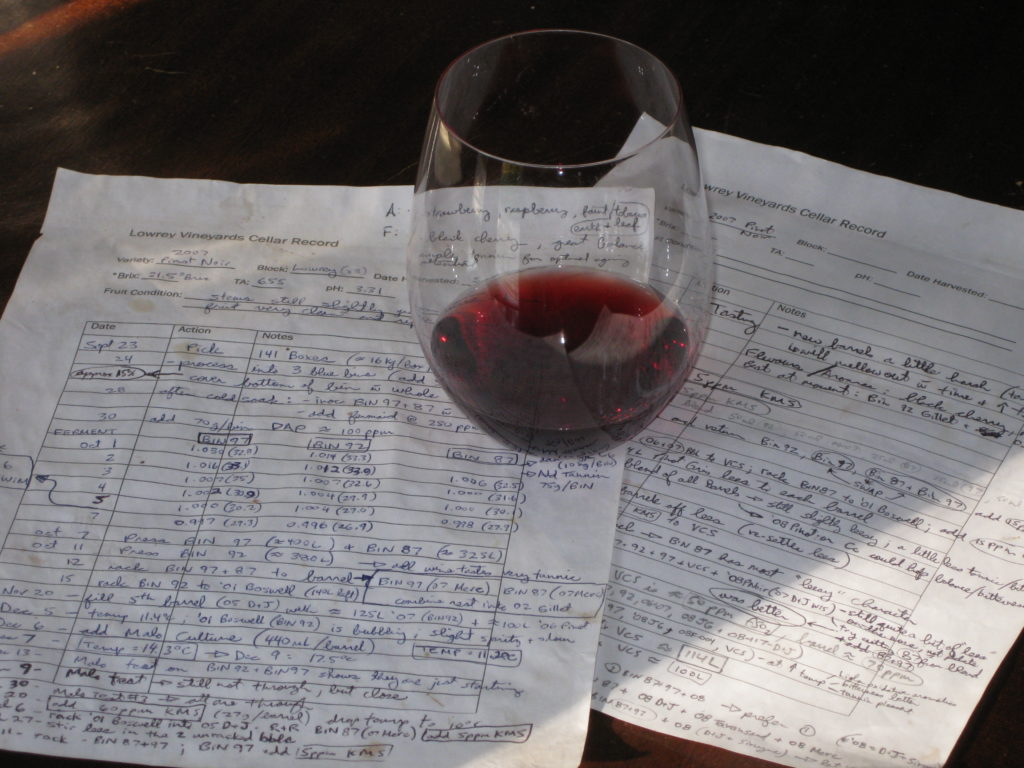
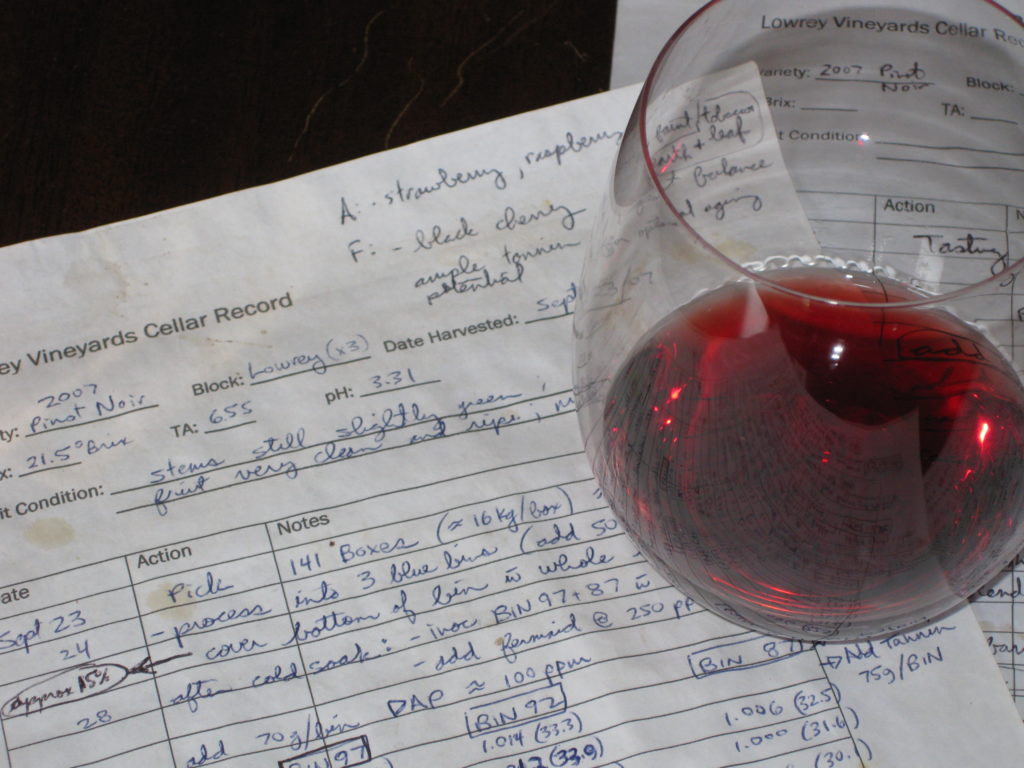
The hot summer of 2007 brought ideal picking conditions to the St. David’s Bench. Roughly three tonnes of Pinot Noir were hand-picked on September 23 at just under 22 degrees brix, having TA of 6.55 and pH 3.31. Prior to picking, seed and skin tannins were both showing excellent maturity, and flavours were reminiscent of ripe seasons past (1998, 2001).
It was decided to source equal amounts of fruit from the three Lowrey Pinot blocks of differing ages (20 years, 15 years and 10 years). Each block was processed into open-top fermentors, with 15% of the fruit being left as whole-bunch. Bins were then sealed and underwent a lengthy cold soak to promote extraction.
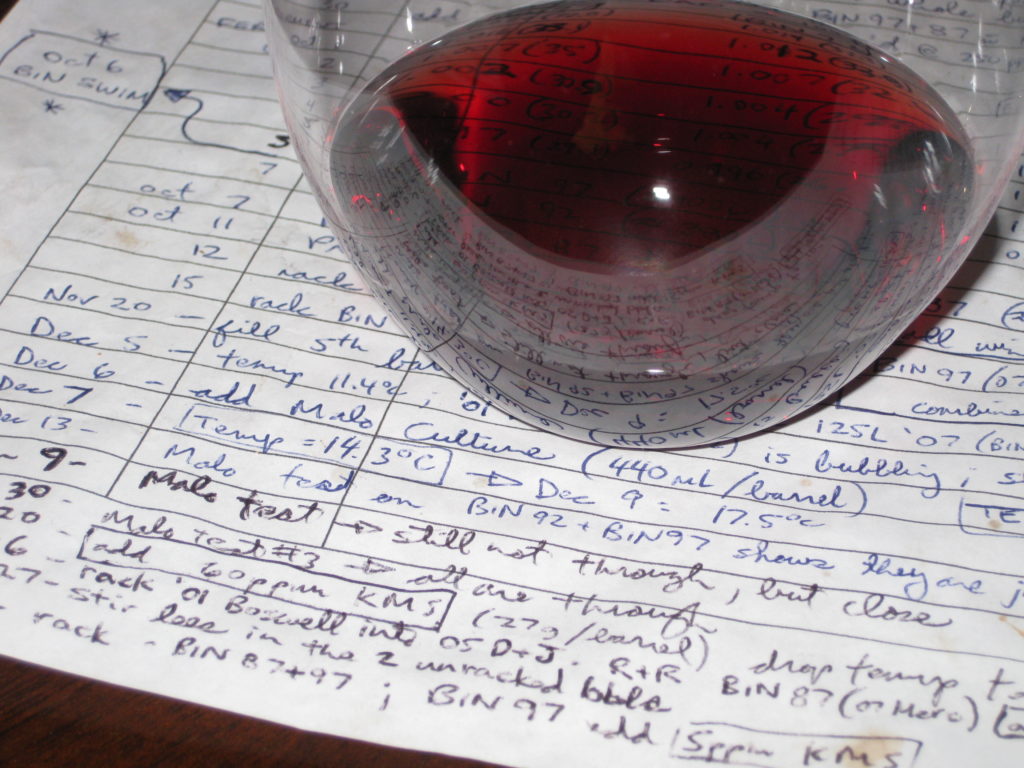
Ferments were generally quick and warm, with peak temperatures in the low 30s. The wines were pressed into five French oak barrels (2 new, 3 old). Malolactic fermentation was carried out over the next few weeks in barrel.
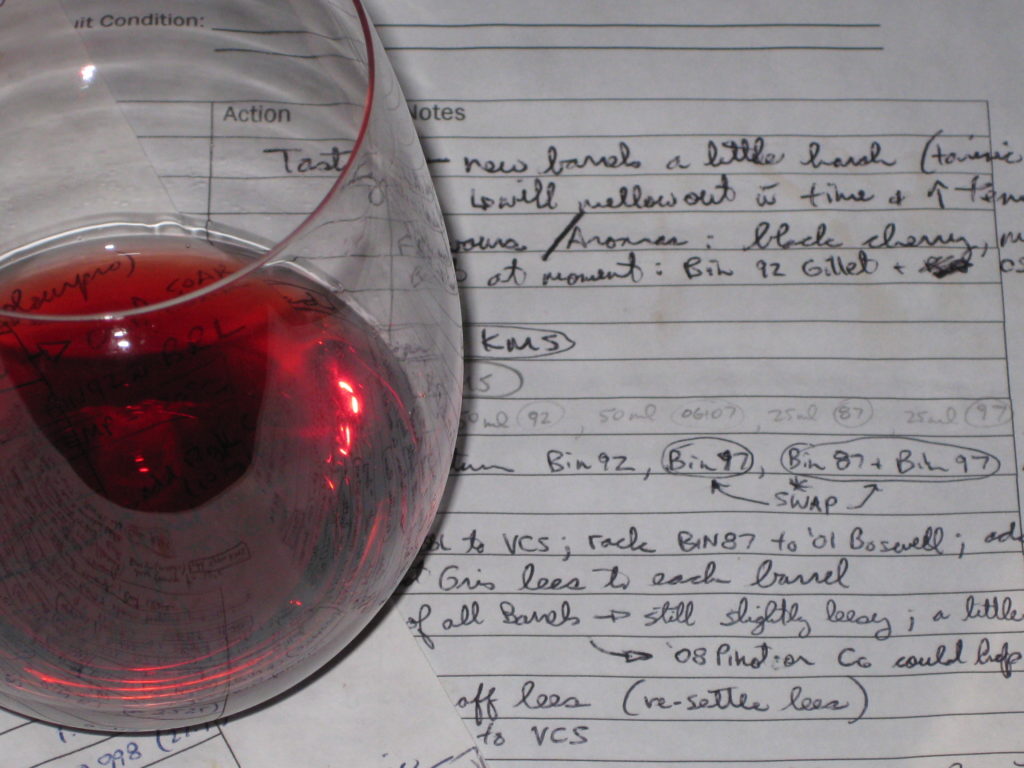
After about a year of aging, it was apparent that the 2007 reds packed a real punch in both flavour and tannin. To mellow the mouthfeel, it was decided after bench-top trials to fine the wines with small volumes of Pinot Gris lees from the 2008 vintage. Following a few days settling, the wines were racked off all lees.
24 months and countless blending trials later, the final cut was married together in a stainless steel tank for final settling and stabilization. 99 cases of this wine were bottled on February 18, 2010.
Aromas: cherry, strawberry, raspberry, earth, and faint tobacco leaf
Palate: flavours of luscious black cherry, great balance, and ample tannin for optimal aging potential
Price: $50 / bottle. Your order can be directed to wines@fiverows.com.
Assiniboine College
What a pleasure it was to have a keen group of culinary/hospitality students from Assiniboine Community College (Manitoba) stop by our barn this morning. Prior to their arrival, I worried that it may be tough to keep our guests entertained for the full two and a half hours they were scheduled for, but once I met them I knew it wouldn’t be a problem!
They were all ears as my mother and I took turns explaining the history of our farm and some of the viticultural practices we employ. The rest of the time was filled with very well thought out questions and subsequent discussion. We concluded the morning with a tasting of our wines, of which I received some great feedback. It is a perk of my job to be able to meet such engaging and talented young people getting set to embark on their careers. I wish them all the best of luck in their future endeavours, and thank them for bringing a sampling of Five Rows back home to Brandon, Manitoba.
A special thanks also goes to Barbara Leslie from Niagara College for hooking us up with our new friends.
Ontario Wine Awards
Five Rows is very proud and excited to be among the finalists for “Best Label Design” at the upcoming Ontario Wine Awards. You can participate in the online judging at the Ontario Wine Awards website. May 21st is the deadline to cast your vote for a chance to win four tickets to the gala event on June 17th. It will be a great night to indulge in the finest wines our province has to offer. The event also marks the Toronto debut of our 2007 Pinot Noir.
I look forward to seeing you there!
2007 Pinot Noir
Here We Go Again
Starting Saturday May 1st, the barn doors will be open once again. I encourage all friends of Five Rows to stop in for a quick sip and chat. We’d love to hear how your winter was and give you a sneak peek at our upcoming release schedule. All the wines are drinking well right now and, consequently, their numbers are dwindling rapidly.
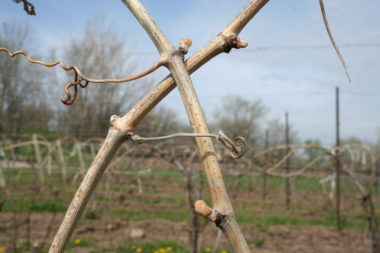
Make sure to bring your boots and take a leisurely stroll through the vineyard. It’s a great time of year to witness new buds popping right before your eyes. I’d be happy to lead a tour for anyone interested. Thanks to the wonderful spring weather that’s graced Niagara, we are a good 10-14 days ahead of a normal year. As I envision what the 2010 vintage could potentially become, I hear the voice of my wise and battle-tested father reminding me not to count my chickens just yet.
At Long Last
Since deciding to start a winery, the question I get asked most is, “so when is the Pinot going to be ready?”. I’ve stalled and tap-danced around the answer for about a year now, but not any longer.
Twenty-three years ago, five unassuming rows of Burgundian Clone 115 Pinot Noir were planted by a skeptical crew of individuals amid concerns about the future of a seemingly faltering grape and wine industry. Would these vines even live to produce a crop? Only time would tell.
No doubt my eagle-eye grandfather drove the tractor that fateful day, as this most important job meant the difference between straight and crooked rows. To this day I’m amazed at his accuracy each time I gaze down a row in that vineyard. The unsung heroes of the operation were the two women perched precipitously upon the planter as it was tugged violently behind the tractor. My Mother and Aunt Pat were responsible for placing the young vines into the freshly harrowed trench at consistent intervals, all the while being tossed about on their cast iron seats. Timing is everything, as vines planted too close together or too far apart can create a trellising nightmare (by the way, this is all done with laser and GPS nowadays). I’m sure they were made well aware if any of the vines looked a little out of place! Trudging along solemnly behind the operation was my Father, personally tamping and straightening each vine. Did he have an inkling that one day I’d be writing about this? Probably not. At the time he didn’t know a Pinot from his elbow, so most likely he would have laughed at the thought of his young son as a blog-writing winemaker. His deep connection to these original vines was evident in recent years when I saw him conspicuously wipe away few tears as we uprooted out some old, grisled vines that didn’t make it through winter. Maybe it was just something in his eye.
Ironically, the rough clay-loam and limestone soil being cursed by the planters that day ultimately proved to be a key factor in the future success of these vines. From the first wines made out of this fruit, it was apparent that the enigmatic effects of Terroir could be applied to this small patch of land in St. Davids. The Reserve Pinot Noir produced by Inniskillin in the early 90s was much sought after and helped to elevate the image of Niagara wines as a whole. The success of this Pinot spawned a collaboration project between Inniskillin and a counterpart in Burgundy. Their goal was to produce a Niagara Pinot Noir that could stack up with the finest Grand Cru. French Negotiant Bernard Repolt of Jaffelin was commissioned to select barrels from the Inniskillin portfolio that best represented the beloved wines of his homeland. After an exhaustive search that involved physically tasting soil (“mmm….loamy”) from the vineyard origin of each barrel, he and Inniskillin winemaker Karl Kaiser worked in tandem to come up with a final blend. These critically acclaimed “Alliance” wines sold out lightning fast and really helped put Inniskillin on the map. The fact they ended up choosing Lowrey barrels for the project dramatically changed the focus of our farm and probably had a lot to do with my future choice to become a winemaker. From that point on we weren’t growing grapes, we were growing wines.
Crafting my 2007 Pinot Noir from these same five rows was an exciting process that really brought things full circle. There were plenty of anxious moments, but earlier this year as the wine went into bottle I felt a certain catharsis, knowing there was nothing more for me to do. I have 99 cases of this wine and plan to release it early this summer. If you are interested in reserving a six-bottle case ($300) please let me know soon (wes@fiverows.com). In an effort to maximize distribution I must limit orders to 2 cases.
I’ll follow up with tasting notes and cellar details of this wine closer to the release date.
Love for the Label
I must confess that on occasion I purchase a bottle of wine solely based on the packaging. Don’t lie, I know you do too. After narrowing my search down to a couple of contenders, I’ll often end up choosing the wine whose visual appeal I find more intriguing. This is especially true of those wines I intend to age in my cellar. They are the ones that look so stately all lined up on the rack, the ones I will debate over and over in my mind when to drink. There is a strange bond formed with these wines over time, making it very heart-wrenching to finally insert the fatal corkscrew. I see the beautiful packaging as a constant reminder that this wine is a unique, living work of art.
It has always been very important to me to have my wines showcased in a way that catches people’s attention and relays our message of quality and scarcity. For this reason I’m very proud of our label designers, Insite Design, for some recent praise they’ve received on their work. The Five Rows label has been commended by many global wine design sites (here is an example), as well as being included in a prestigious packaging annual entitled “Boxed and Labelled – New Approaches to Packaging Design”.
Also keep an eye out for “The Art & Design of Contemporary Wine Labels”, a soon to be released book written by Toronto author Tanya Scholes. A true wine label aficionado, Tanya contacted me shortly after our initial launch to get some details about our winery and inquire if she could use our label and story in her book. I look forward to seeing her finished product in August.