
The Joys of Hand Labour
To me, a day spent grunting your way through hard, manual labour offers the ultimate in satisfaction. Granted, there is the physical pain, the mental fatigue and the dragging hours – but at the end of that day you can look back and be proud of what you’ve accomplished, however big or small.
I am truly at peace when working in the vineyard. It’s a time of introspection and reflection blended with intense focus on the job at hand. This is where the “feel” aspect of viticulture comes into play. I don’t know if I actually think about what I’m doing anymore, it just sort of comes naturally. Years of suckering, thinning, shoot positioning and leaf removal have transformed me into a grape-trellising robot of sorts.
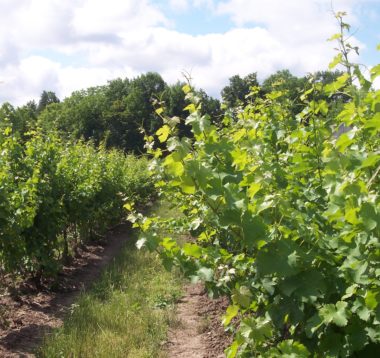
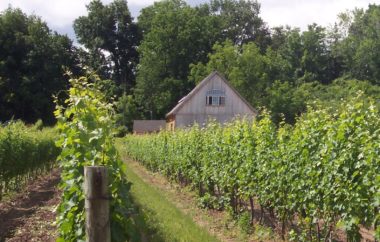
There are many levels of satisfaction involved with vineyard hand labour. First is the feeling that you are helping the vine by removing excess growth. There is also the visual appeal of a clean and vertically positioned vine versus a chaotic canopy. As a neat freak I have an extremely low tolerance for chaos, so bringing order to the vineyard gives me a special joy. Finding a proper spot for each shoot and grape bunch within the canopy is an important job that I am currently undertaking. Large amounts of rain have made that canopy extremely crowded, and the job gets exponentially harder each day as the vine starts growing laterally at a rapid pace. I tend to perceive each vine as a puzzle that needs to be solved, which really gets my creative juices flowing. The pictures below give you a good “before and after” look at our Sauvignon Blanc.
The advent of the iPod has added yet another enjoyment level to this work. I find that the right song at the right time can elicit crazy emotions ranging from pride to the depths of sadness. Ultimately, it helps break the monotony and makes the job go by quicker. Working alone allows me to sing as loud as I want and even throw in the odd dance move if the mood strikes.
Finally, there is a weird spiritual vibe you get while working on a farm that dates back many generations. You can’t help but feel many indelible ties to the past. I must admit that there are days when I feel a definite presence alongside me while working among the vines. It can be in the damp chill of an early morning fog, the flight of a majestic hawk and sometimes in the faint smell of pipe tobacco. Hard to explain, but usually very vivid and strangely calming.
I feel lucky to be able to spend my summer days in the vineyard. Being able to positively effect our 2009 vintage on a daily basis via my method of choice is a luxury that few winemakers are afforded. It’s one of the things that makes Five Rows unique among wineries.
2009 Planting
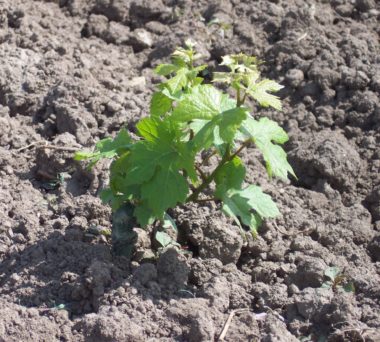
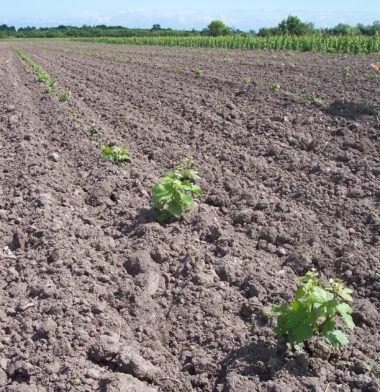
Planting a new vineyard is always a time of apprehension and crossed fingers. Could these little wax-covered sticks present us with an opportunity to produce some world class wines? Only time will tell.
In a moment of weakness, it was decided last year amongst the Lowrey Vineyards brain trust (and I use that term very loosely) to plant nine more rows of Pinot Noir. If you’ve read previous entries of this blog, you’ve no doubt heard me describe some of the challenges we’ve faced growing Pinot over the years. So why opt for more punishment you say? I found myself wondering that exact thing as we planted the vines this past Tuesday. Why not plant something easy to grow like Chardonnay or Cabernet Franc? Therein lies the allure of Pinot Noir. It gets in your blood, it messes with your mind and it leads to irrational decisions. I liken Pinot to a parasite who’s goal is not to have its host die, but rather suffer just enough to allow itself to thrive.
In a nutshell, the thing that makes Pinot so tough to grow are it’s tight little clusters of thin-skinned berries. These clusters are like ticking time bombs just waiting for the opportunity to explode. If one single berry in the middle of that cluster were to split, the whole bunch is usually compromised with botrytis or sour rot. Once this rot has taken hold within the canopy, it spreads like wildfire from cluster to cluster aided by the dreaded fruit fly. This sad fate has befallen many of the most promising crops of Pinot Noir. The end, however, more than justifies the means. If you can survive the gauntlet, Pinot Noir will reward your hard work. That is why we planted the nine rows: a shot at glory!
To add complexity to future wines we decided to experiment with different clones and rootstocks in this block. Our older Pinot vines are all famed Dijon clone 115 on S04 rootstock. In the new planting, we’ve included equal portions of clones 777, 667 and more 115. The two new clones are known to have slightly looser clusters and thicker skins, producing wines with stronger black fruit and gamey notes. To help control vine growth, we had the vines grafted to lower vigour rootstocks (101-14 and 3309) and planted them more densely in a patch of clay-based soil.
Since Tuesday, we’ve thankfully had two substantial rainfall’s to help the little guys along. I would like to thank Wes Weins and his staff at Gemmrich W. Nursery for providing us with vines grown to our exact specifications.
Bottling Quandry
One large hurdle that a small winery must overcome is figuring out the best way to bottle their wine. The simple act of getting the wine into the bottle can frustrate even the most seasoned of winemakers. Larger wineries can usually justify purchasing a bottling line based on their projected cash flow and volume of wine produced. For us, however, this is a bit of a grey area that thankfully presents a few options.
In the midst of this busy vineyard season, bottling wine is about the last thing I want think about. My initial plan was to bottle our 2008 whites late in the summer, but due to the popularity of our 2007 Pinot Gris (only 12 cases left) we are mulling over the “good” problem of having to move that date up a bit. In the past, our bottling runs were done by the seat of our pants in conjunction with the good folks at Creekside. Once my wines were ready I was able to white-knuckle them over the QEW in the back of our truck to the “trusty” old Creekside bottling line. Held together with enough duct tape to make even Red Green jealous, that line bore witness to its fair share of tears, shonks and damn good wine before being retired last year.
Another option we are looking into is the mobile bottling line, essentially everything you need in the back of a semi-trailer. Hook up your hose to one end of the trailer and packaged wine magically appears from the other end. Convenience aside, I’m still not convinced that this is the most cost effective method for small runs like ours (50-100 cases). It would be ideal if all our wines, white and red, were ready at the same time and I could hire the mobile line to bottle them in one day, but that will likely never be the case.
Due to the success of our unfiltered 2004 Cabernet Sauvignon, I plan to experiment with more unfiltered products in future releases. It’s risky, but I think a few unfiltered cases of each wine is doable. As long as our customers bear with us, I’m willing to give it a shot. Given this, I suppose it’s possible to manually bottle small amounts of wine the old fashion way. Wouldn’t that be fun? No one says you have to bottle your wine all at once. You could call in your order in the morning and I would bottle it fresh from the barrel that afternoon. The next day you wake up and it’s on your front step, just like the milk man! Perhaps a little pie in the sky but you never know…
The Irony and Necessity of Thinning
Alright, your precious buds have made it through a long winter and recently survived a few very close calls with frost – now what is their reward? Knock half of them off!
Arguably the most important job through the grape-growing season is “thinning” or the selective removal of excess shoots and clusters. We normally start to focus on shoot-thinning at this time of year, as it becomes evident how many buds are viable and how crowded the vine is with growth. Getting an early start is extremely important, as these growing shoots tend to explode towards the sun at rapid pace, especially in warmer spring weather like we are currently experiencing. By my reckoning we are about 7-10 days ahead of the average season at this stage, boding well for getting things ripe at season’s end.
Shoot-thinning aids the growing vine in a number of ways. It gives the remaining shoots a boost in resources, reduces the crop load on the vine, and prevents over-crowding in the canopy. The goal is to get the vine to a stage where it can adequately ripen the crop load you are comfortable with. A less dense canopy is advantageous because it allows better air flow for mildew and botrytis control and increased sun exposure for the clusters. The finishing touch is cluster-thinning around veraison, which helps endow our wines with the concentrated flavours and aromas we are after. I don’t even want to think about cluster-thinning yet, so I’ll tackle that subject at a later date!
I’d also like announce the arrival of the newest addition to our family, a puppy named Lucy. She is an eight week old Nova Scotia Duck Tolling Retriever who will be in charge of bird control and public relations. As for her guard dog skills, I’m skeptical at best, so we’ll spare her that chore for now. I love Lucy.

David Lawrason Review
We are very humbled to have David Lawrason review our wines. He is a very prominent Canadian wine writer whose opinions are held in the highest regard within our industry. Here is what David had to say about our wines:
Five Rows Cabernet Sauvignon 2004
89 points
Only two barrels were produced of this inaugural wine – 45 cases, which sold
out quickly. Lowrey Vineyards has been farmed for five generations, but this
is the first wine; and a dandy. It is a light cabernet sauvignon but very
tasty and savoury with lifted, well integrated aromas of red currant,
raspberry, tea, mocha and spice. It’s very supple, smooth and juicy on the
palate with very soft tannin and excellent length.
Five Rows Sauvignon Blanc 2007
91 points
Only 47 cases were produced from a vineyard but this is very much worth
mentioning for the quality that has been rendered by grower Wes Lowrey’s
first vintage. These grapes have also supplied Creekside’s successful
sauvignons. Fermented in old French oak this has an almost impeccably
smooth, creamy yet not the least fat texture. The nose is ripe, fresh, light
spicy and semi-tropical (I thought immediately of Cloudy Bay) with
lemon-lime, green melon and vaguely minty notes. Very focused on the finish
with excellent length. Very classy wine.
Five Rows Pinot Gris 2007
88 points
From fully ripened grapes this a mellow, mild, richly textured pinot gris
with fruit aromas in the realm of green fig, green banana and ripe pear.
It’s full bodied, very smooth and satiny on the palate with a warm, slightly
sweet ambiance. Very good length.
Filling the Gaps
What do you do when a grapevine dies? The simple answer is that you plant another one in its place. As you navigate the process, however, you come to the realization that there is nothing simple about it!
Due to some cold winter temperatures a few years back, many of our vineyard blocks were left with significant vine death (up to 25% in some spots). Of the surviving vines, many suffered trunk damage to the extent where new suckers had to be brought up from the ground to re-establish the trellis. As a result, our yields were reduced for four consecutive years until the vines recovered and/or were replaced.
Once planted, a replacement vine usually doesn’t usually produce fruit until its third season. They are finicky little buggers that need copious amounts of sun, water, nutrition, protection, structural support and general TLC. They are usually flanked by two old, grumpy vines with deep roots (who were getting used to the extra leg room) that are unwilling to yield any of those aforementioned necessities to this new kid on the block. You begin to see the conundrum. The vineyard as a whole still has to be farmed the same in terms of tilling, hoeing, etc.; but now every practice has to be tailored around these fragile young vines.
The first line of protection for the little guys is the insertion a small stake beside each vine. This prevents the tractor-operated grape hoe from ripping them out of the ground as it removes weeds between the other mature vines. The second line of defence is a “jacket”, of sorts, that envelopes the vine and protects it from herbicides, mechanical damage and rodents. Known as “grow tubes”, they also provide some insulation on those frosty, nervous mornings in the spring.
The temptation is to try to get fruit by the second season of growth, but the smart farmer knows that fruit takes energy from the growing vine, and deep roots are more important than a temporary gain in crop. For this reason the replants are pruned right back to a couple of buds over winter, and any clusters of grapes that do appear the next season are trimmed off.
So the next time you stop by our winery, make sure to take a stroll out to the Sauvignon Blanc and take a peek into the ugly pink grow tubes that dot the vineyard. The little vine you see inside may one day produce fruit that makes the cut in one of our wines. Until then, I just hope Dad doesn’t plow it under by mistake…
Summer Hours
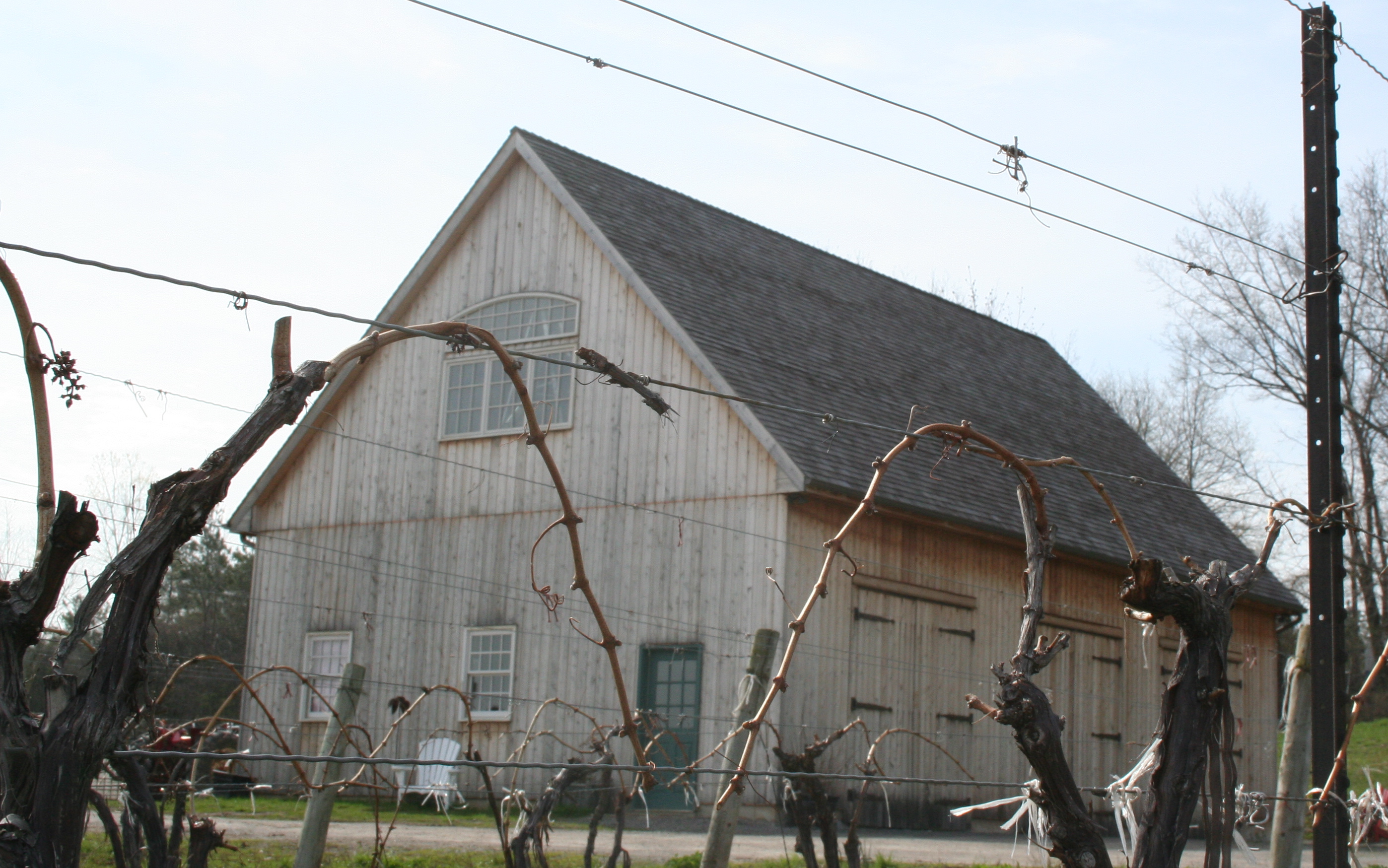
Along with my parents, I would like to announce that our barn will be open to customers for weekends this summer starting Saturday, May 2nd. One of us will be there to serve you on Saturdays and Sundays from 11am-5pm (or thereabouts) until the end of August. The odd time you may have to come and find us somewhere on the farm, but I assure you we will be more than happy heading back into the cool barn to take you through a tasting of our wines! During the week it is still best to call ahead before you stop by to make sure we are available.
I look forward to your visit!
Virtue is Ever Green
My anticipation always heightens at this time of year. Buds are swelling, sap is running and our “to do” list grows exponentially with each warming day. Year in and year out it’s the same routine, but somehow it never gets old. Needless to say, this seasonal ritual predates us and has been experienced by humans since crops were first domesticated some 10 000 years ago.
Through a bit of research I’ve discovered that the Lowrey family has a couple of interesting mottos adorning its Coat of Arms, perhaps shedding a little light on why we make our living as farmers. Depending on the spelling of “Lowrey” and the associated place of origin, the Coat of Arms features the words “Repullulat” or “Virtus Semper Virdis”.
Repullulat translates to “It buds afresh” – and the connection here is pretty obvious. Virtus Semper Virdis translates to “Virtue is ever green” – which could be interpreted a couple of different ways. I like to think that the earliest Lowrey’s foresaw the importance of growing crops and preserving the essence of land through sustainability.
This continues to be a focus of ours, both through vineyard practices and now in designing our wine operation. It is our goal to give Five Rows more of an authentic feel than other “spare no expense” operations. In other words, don’t expect glitz or polish when you pull into our driveway! We don’t even have a sign yet, but somehow people still manage to find us.
Some sustainable and eco-friendly initiatives we promote are: leaf removal and hedging of vines by hand; close proximity of vineyard to picking and crushing facilities; hand-picking of fruit, minimal wine handling; gravity racking (no pump); hand labeling; small, moveable wine tanks (making barn space more flexible); cold stabilization of wine is done outside using the cold temperatures (versus a climate controlled room); finally, we don’t cater to large tour buses.
I welcome any new ideas that you folks may have to aid in reducing our carbon footprint. This will help to strengthen our farm business and keep things “ever green”.
Experience our wine
A number of you have asked where you can experience our wines. The list of places to taste by the glass is now a little longer as we are pleased to announce the following establishments are selling Five Rows:
The Charles Inn – 2004 Cabernet Sauvignon
Treadwell’s / Snobs Wine Bar – 2007 Pinot Gris by the glass
Jamie Kennedy’s Wine Bar– 2004 Unfiltered Cabernet Sauvignon
Please support these friends of Five Rows and remember to write down your bottle numbers to enter into our bottle registry.
Spring Tastings Begin…
Spring is here, and over the last week I’ve had the pleasure to host a couple of fun and lively tasting sessions. It was a welcome break from pruning to be joined by groups of both wine “lovers” and wine “makers”, respectively, for a tour of our barn and a taste through the Five Rows portfolio. I have to admit that I still get butterflies when pouring our wines for those who have yet to try them, and I don’t think that will change anytime soon.
I like to use these tastings to gauge the general vibe that people are getting from our winery, and based on our first few sessions the feedback has been tremendous. It excites me that our new friends really get what we are trying to do and often express a desire to lend a hand in the vineyard sometime next season. I’m hoping they all realize that I just might have to take them up on that offer!
I’m finding that each tasting takes on its own dynamic, which keeps me on my toes and very engaged. Often times I like to slip in a new barrel blend that I’ve been working on, as this is a great way to get valuable opinions directly from the people that matter…the wine buyers. Despite subjecting my guests to this “guinea pig” treatment, I’ve yet to receive any complaints.
For example, I’m always trying to fine-tune our 2007 Pinot Noir by experimenting with different amounts of 2008 Pinot as part of the blend. As a rule, we are allowed to blend up to 15% of different vintages into a single varietal wine. The potential marriage of these two vintages is very intriguing. The 2007 Pinot abounds with tannin, colour, and bold “new world” flavours, while the 2008 is more reminiscent of a classic Lowrey Pinot; subtle, elegant and classically Burgundian. To date I’ve experimented with 5-10% of the 2008 in the blend, and results have been mixed. Some loved it, some wanted more 2008, and some felt that it is simply too early to evaluate the potential of the 2007 alone. I tend to fall into the latter category, so perhaps I’ll stop bugging the Pinot and let it do it’s thing for a little while longer.
To our friends in Niagara-On-The-Lake: we are pleased to announce that you can now enjoy our 2004 Cabernet Sauvignon at the historic Charles Inn.