
The Fish of 1000 Casts


The weather over the last few weeks has left many farmers cursing their luck and already looking ahead to next year. Cold temperatures, rain and periodic hail have left us wondering if and when summer will finally arrive.

Determined not to let this “dampen” our annual trip to Bobcaygeon, I threw together a few barrel samples and we hit the road with an excited puppy in tow. I always look forward to this brief respite from the farm as it allows me to indulge in one of my true passions: the pursuit of the elusive Muskellunge.

Muskies are large, vicious predators that feast on other fish, small water fowl, and the occasional unlucky swimmer.  One encounter with these toothy monsters is all it took to breed my obsession.  I will caution, however, that muskie fishing can lead to extreme frustration, nightmares and hooks being painfully lodged into various body parts.

Come to think of it, fishing for muskies is a lot like growing and crafting Pinot Noir.  Both are very “results driven” hobbies that require the utmost patience.  I’ve learned that the joy must come in the anticipation and pursuit of that “result” or else you will be disappointed more often then not.  The near misses that one encounters in each of these endeavors can be as character building as they are heartbreaking.  For me, the thrill is knowing that the biggest and best is still lurking out there, just waiting to be caught or crafted.   Alas, despite many hours and thousands of casts, I came up empty on my muskie hunt this year.  There was one mighty strike though, and that is more than enough to satisfy my passion for another year.

I was a little luckier with the wine samples, as they were a big hit at one of our cottage feasts.  We tasted a bottle of our 2005 Cabernet Sauvignon and a barrel sample of the 2007 Pinot Noir in an effort to decide on a release date.  Understandably, the 2005 Cab was miles ahead of the 2007 Pinot in terms of being ready to drink, but the Pinot showed some exciting signs of maturity since the last time we tried it.  The tannins are finally starting to soften, allowing the classic Pinot flavours and satiny mouthfeel to shine through.  Aromatically, the 2007 Pinot has always packed a punch, but this particular blend took a while to open up, but once it did…oh my.  It was decided to bottle this wine soon, with hopes of a spring 2010 release. Look for the 2005 Cab in late November.
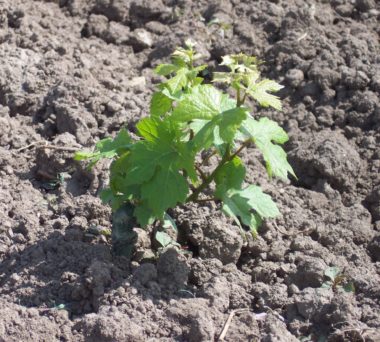
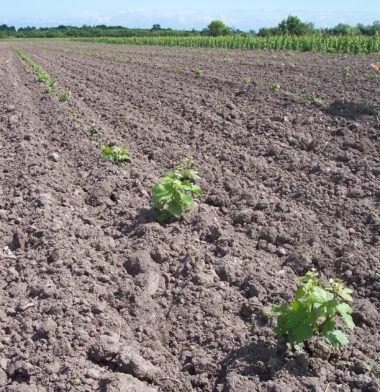
2009 Planting


Planting a new vineyard is always a time of apprehension and crossed fingers.  Could these little wax-covered sticks present us with an opportunity to produce some world class wines?   Only time will tell.

In a moment of weakness, it was decided last year amongst the Lowrey Vineyards brain trust (and I use that term very loosely) to plant nine more rows of Pinot Noir.  If you’ve read previous entries of  this blog, you’ve no doubt heard me describe some of the challenges we’ve faced growing Pinot over the years.  So why opt for more punishment you say?  I found myself wondering that exact thing as we planted the vines this past Tuesday.  Why not plant something easy to grow like Chardonnay or Cabernet Franc?  Therein lies the allure of Pinot Noir.  It gets in your blood, it messes with your mind and  it leads to irrational decisions.  I liken Pinot to a parasite who’s goal is not to have its host die, but rather suffer just enough to allow itself to thrive.

In a nutshell, the thing that makes Pinot so tough to grow are it’s tight little clusters of thin-skinned berries.  These clusters are like ticking time bombs just waiting for the opportunity to explode.  If one single berry in the middle of that cluster were to split, the whole bunch is usually compromised with botrytis or sour rot.  Once this rot has taken hold within the canopy, it spreads like wildfire from cluster to cluster aided by the dreaded fruit fly.  This sad fate has befallen many of the most promising crops of Pinot Noir.  The end, however, more than justifies the means.  If you can survive the gauntlet, Pinot Noir will reward your hard work.  That is why we planted the nine rows:  a shot at glory!

To add complexity to future wines we decided to experiment with different clones and rootstocks in this block.  Our older Pinot vines are all famed Dijon clone 115 on S04 rootstock.  In the new planting, we’ve included equal portions of clones 777, 667 and more 115.  The two new clones are known to have slightly looser clusters and thicker skins, producing wines with stronger black fruit and gamey notes.  To help control vine growth, we had the vines grafted to lower vigour rootstocks (101-14 and 3309) and planted them more densely in a patch of clay-based soil.

Since Tuesday, we’ve thankfully had two substantial rainfall’s to help the little guys along.  I would like to thank Wes Weins and his staff at Gemmrich W. Nursery for providing us with vines grown to our exact specifications.


Spring Tastings Begin…


Spring is here, and over the last week I’ve had the pleasure to host a couple of fun and lively tasting sessions.  It was a welcome break from pruning to be joined by groups of both wine “lovers” and wine “makers”, respectively, for a tour of our barn and a taste through the Five Rows portfolio.  I have to admit that I still get butterflies when pouring our wines for those who have yet to try them, and I don’t think that will change anytime soon.

I like to use these tastings to gauge the general vibe that people are getting from our winery, and based on our first few sessions the feedback has been tremendous.  It excites me that our new friends really get what we are trying to do and often express a desire to lend a hand in the vineyard sometime next season.  I’m hoping they all realize that I just might have to take them up on that offer!

I’m finding that each tasting takes on its own dynamic, which keeps me on my toes and very engaged.  Often times I like to slip in a new barrel blend that I’ve been working on, as this is a great way to get valuable opinions directly from the people that matter…the wine buyers.  Despite subjecting my guests to this “guinea pig” treatment, I’ve yet to receive any complaints.

For example, I’m always trying to fine-tune our 2007 Pinot Noir by experimenting with different amounts of 2008 Pinot as part of the blend.  As a rule, we are allowed to blend up to 15% of different vintages into a single varietal wine.  The potential marriage of these two vintages is very intriguing.  The 2007 Pinot abounds with tannin, colour, and bold “new world” flavours, while the 2008 is more reminiscent of a classic Lowrey Pinot; subtle, elegant and classically Burgundian.  To date I’ve experimented with 5-10% of the 2008 in the blend, and results have been mixed.  Some loved it, some wanted more 2008, and some felt that it is simply too early to evaluate the potential of the 2007 alone.  I tend to fall into the latter category, so perhaps I’ll stop bugging the Pinot and let it do it’s thing for a little while longer.

To our friends in Niagara-On-The-Lake:  we are pleased to announce that you can now enjoy our 2004 Cabernet Sauvignon at the historic Charles Inn.

Harvest 2008 – Part One


Vintage ‘08 is upon us and to this point things have been…well…in a word …WET!!  Enough rain already.  I mean just when I thought we were in the clear we got doused by the remnants of a hurricane, and for the record: I don’t like Ike. Thankfully, the last couple of weeks have more than made up for the rain, with plenty of sunshine and perfect ripening conditions for the early varietals.

As per usual, the “Heartbreak Grape”, Pinot Noir, lived up to its moniker and provided lots of nervous moments and second guessing.  In fact, one day in the vineyard while pondering a harvest timing decision, I found myself singing aloud to the Clash hit “Should I Stay or Should I Go”.  The Pinot were clean but slightly underripe, with threatening weather on the horizon (“If I go there will be trouble / And if I stay it will be double”).  Ultimately, we decided not to pick and wait out what suddenly became Hurricane Ike.  All the water led to some berries actually splitting and roused us into action.  Led by a Pinot-loving mother hell-bent on saving her crop, the three of us spent two mind-numbing days cutting out individually split berries and underripe clusters.  On September 16th and 17th we finally hand-picked our first two tonnes of fruit.  In the end, what came in was ripe, clean (thus receiving the Wilma stamp of approval) and fermented into some really intriguing stuff.  I experimented with a new yeast strain this season called W15, which after pressing today, is the early favourite to put into our 2 new Sirugue barrels.

The whites, Pinot Gris and Sauvignon Blanc, are happily fermenting in the cold room of our barn as I write this.  I decided to add a single barrel ferment to the Pinot Gris regime this year, in an attempt to add a bit more complexity and refined mouthfeel to the final blend.  The majority will still be fermented in stainless steel because it worked so well last season.   From “the never do that again” file, we actually bottled our 2007 Sauvignon Blanc and Pinot Gris between the days we picked the 2008 crops of each varietal.  Any winery employee will profess that harvesting and bottling are not meant to intermingle, but sometimes you just have to make room for the new stuff.  The ’07 whites will be a part of our initial release slated for the beginning of November.

The Shiraz and Cabernet Sauvignon are still hanging strong and starting to pick up sugar and enhanced flavours on a daily basis.  I’ll keep you posted as the rest of Vintage ‘08 unfolds.  Better yet, stop by for a chat and taste a few berries yourself!

My Legacy


Over the coming weeks and months I hope to provide you with a raw, uncensored look at the travails and joys associated with opening a small, craft winery.  Am I crazy?  Perhaps. In fact, some have suggested just that. I would argue, however, that it may be the only way to satisfy my burning desire to make small quantities of great wine from our storied family vineyard.

Our farm dates back five generations to the days of David Jackson Lowrey, who planted Niagara’s first commercial vineyard in the late 1800s.   Fast forward four generations to today and you’ll find my two personal heroes still farming this land.  The vines have changed and the “tractors” don’t have legs anymore, but I’m sure my parents Howie and Wilma still worry about their crops the same way David Jackson did back in his day.  Each generation has had to adapt and evolve with the times, and I see this small winery as my opportunity to do the same.

My parents bought the farm, so to speak, from my grandparents back in the 1970s when it was planted mainly with old Labrusca and Hybrid grapevines, which were common in Niagara at the time.  My father and grandfather, the two Howards, worked as a formidable tandem to manage the farm, as my first vivid childhood memories can attest.

A sweeping grapevine pull-out program, prompted by the pending Free Trade agreement of the mid-80s, forced my parents to make many difficult and thankfully “wine-friendly” decisions.  Amid the worries of a future without vineyards, it was Karl Kaiser of Inniskillin Wines who suggested that our site would be perfectly suited for the hard to grow, vinifera grape varieties that were beginning to show promise in the Niagara Region.  So it was with skepticism and crossed fingers that we decided to plant five trial rows of Pinot Noir in 1987.  The rest, as they say, is history.  I can only hope that our new winery ensures that the farm is sustainable for generations to come.