Virtue is Ever Green


My anticipation always heightens at this time of year.  Buds are swelling, sap is running and our “to do” list grows exponentially with each warming day.  Year in and year out it’s the same routine, but somehow it never gets old.  Needless to say, this seasonal ritual predates us and has been experienced by humans since crops were first domesticated some 10 000 years ago.

Through a bit of research I’ve discovered that the Lowrey family has a couple of interesting mottos adorning its Coat of Arms,  perhaps shedding a little light on why we make our living as farmers.  Depending on the spelling of “Lowrey” and the associated place of origin, the Coat of Arms features the words “Repullulat” or “Virtus Semper Virdis”.

Repullulat translates to “It buds afresh” – and the connection here is pretty obvious.  Virtus Semper Virdis translates to “Virtue is ever green” – which could be interpreted a couple of different ways.  I like to think that the earliest Lowrey’s foresaw the importance of growing crops and preserving the essence of land through sustainability.

This continues to be a focus of ours, both through vineyard practices and now in designing our wine operation.  It is our goal to give Five Rows more of an authentic feel than other “spare no expense” operations.  In other words, don’t expect glitz or polish when you pull into our driveway!  We don’t even have a sign yet, but somehow people still manage to find us.

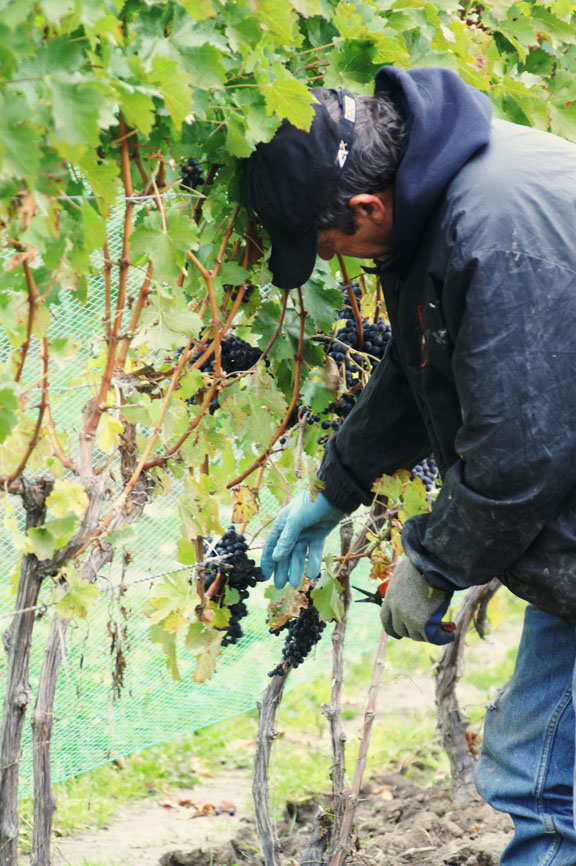
Some sustainable and eco-friendly initiatives we promote are: leaf removal and hedging of vines by hand; close proximity of vineyard to picking and crushing facilities; hand-picking of fruit, minimal wine handling;  gravity racking (no pump); hand labeling; small, moveable wine tanks (making barn space more flexible); cold stabilization of wine is done outside using the cold temperatures (versus a climate controlled room);  finally, we don’t cater to large tour buses.

I welcome any new ideas that you folks may have to aid in reducing our carbon footprint.  This will help to strengthen our farm business and keep things “ever green”.
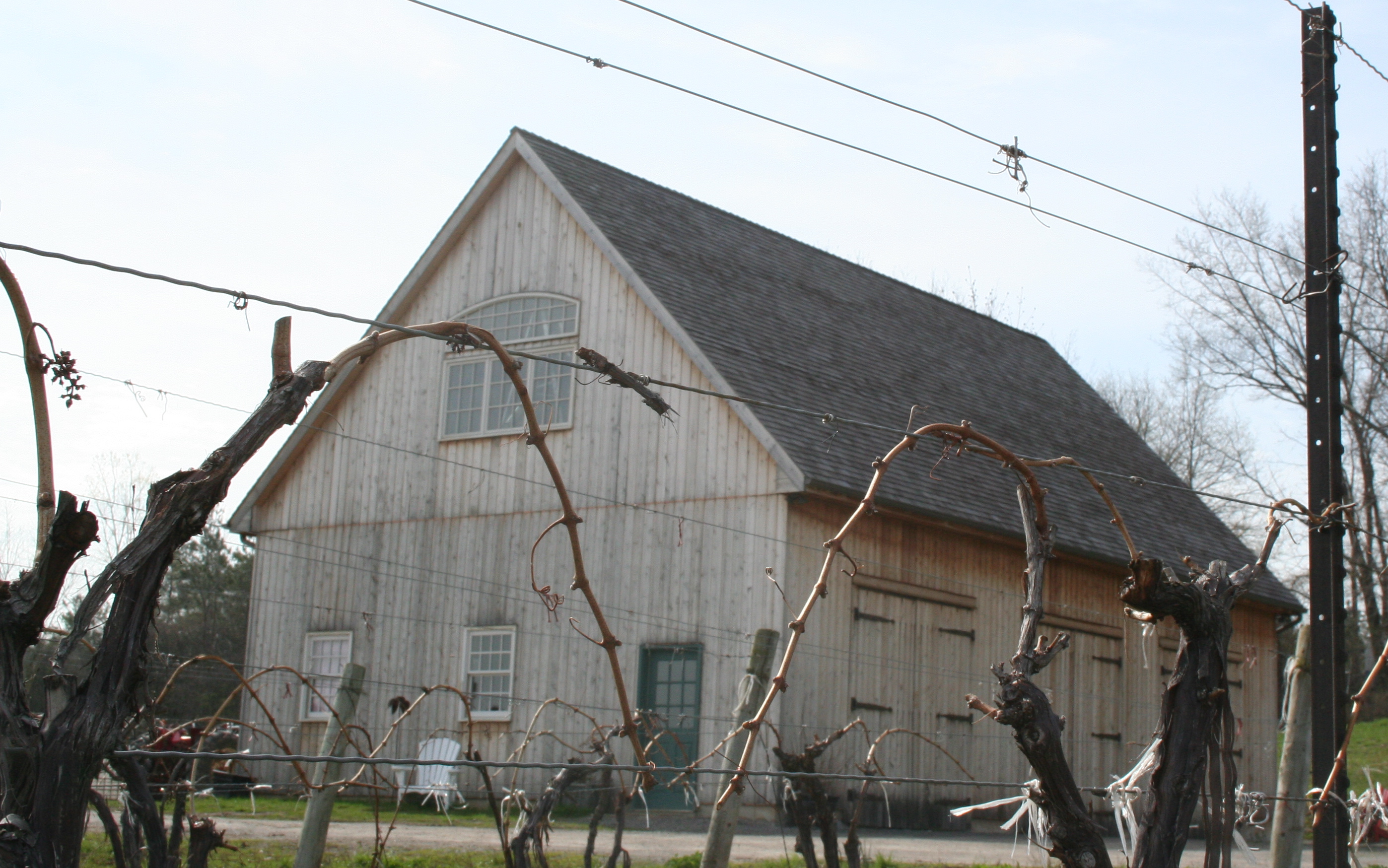
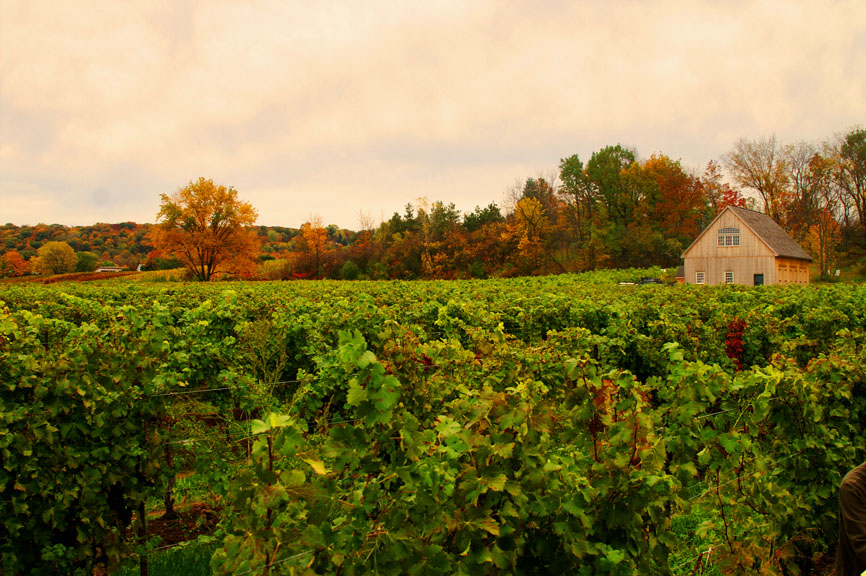
barn and buds


Spring Tastings Begin…


Spring is here, and over the last week I’ve had the pleasure to host a couple of fun and lively tasting sessions.  It was a welcome break from pruning to be joined by groups of both wine “lovers” and wine “makers”, respectively, for a tour of our barn and a taste through the Five Rows portfolio.  I have to admit that I still get butterflies when pouring our wines for those who have yet to try them, and I don’t think that will change anytime soon.

I like to use these tastings to gauge the general vibe that people are getting from our winery, and based on our first few sessions the feedback has been tremendous.  It excites me that our new friends really get what we are trying to do and often express a desire to lend a hand in the vineyard sometime next season.  I’m hoping they all realize that I just might have to take them up on that offer!

I’m finding that each tasting takes on its own dynamic, which keeps me on my toes and very engaged.  Often times I like to slip in a new barrel blend that I’ve been working on, as this is a great way to get valuable opinions directly from the people that matter…the wine buyers.  Despite subjecting my guests to this “guinea pig” treatment, I’ve yet to receive any complaints.

For example, I’m always trying to fine-tune our 2007 Pinot Noir by experimenting with different amounts of 2008 Pinot as part of the blend.  As a rule, we are allowed to blend up to 15% of different vintages into a single varietal wine.  The potential marriage of these two vintages is very intriguing.  The 2007 Pinot abounds with tannin, colour, and bold “new world” flavours, while the 2008 is more reminiscent of a classic Lowrey Pinot; subtle, elegant and classically Burgundian.  To date I’ve experimented with 5-10% of the 2008 in the blend, and results have been mixed.  Some loved it, some wanted more 2008, and some felt that it is simply too early to evaluate the potential of the 2007 alone.  I tend to fall into the latter category, so perhaps I’ll stop bugging the Pinot and let it do it’s thing for a little while longer.

To our friends in Niagara-On-The-Lake:  we are pleased to announce that you can now enjoy our 2004 Cabernet Sauvignon at the historic Charles Inn.

Longing for the Beauty of Fall


With some extremely cold days bearing down on us later this week, I can’t help but find myself nostalgic for a beautiful fall day.  I hearken back to the memorable November day when we wrapped up our 2008 harvest by hand-picking some very ripe Cabernet Sauvignon.  The end of harvest is always kind of bittersweet because it represents a time when, thankfully, the stress is gone, but so is the fast-paced, daily excitement and a bond to something you’ve tended with care all season.

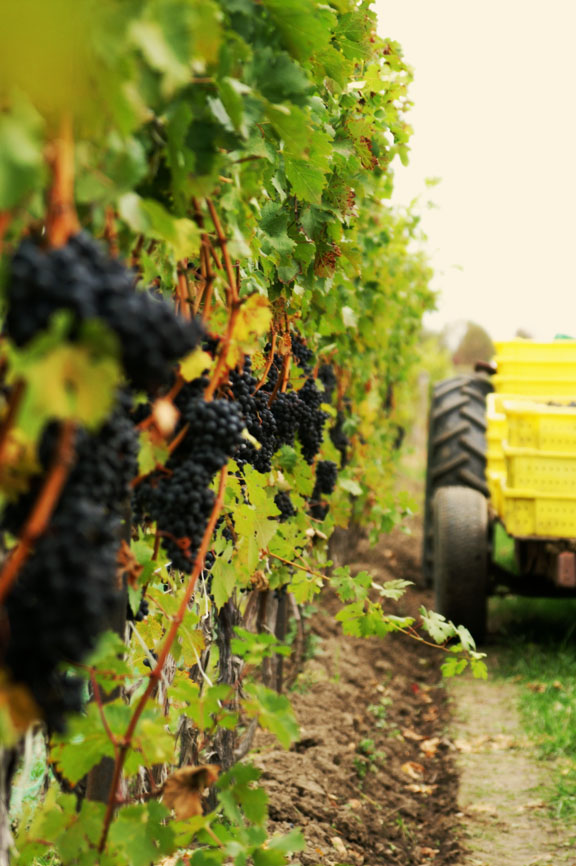
I remember that day on many levels.  The crisp aromas in the fall air, the wonderfully rich colours filling the escarpment, the small dark clusters of Cabernet, lugging picking baskets onto the wagon knowing that I was going to pay for it the next day, worrying that I might not have enough bin space to accommodate both rows of grapes, then forgetting all my worries listening to a Fleet Foxes song on my iPod….ahh to be back just for a moment!  As I rode back to the barn with this last load, I remember thinking that I must be the luckiest guy on earth to be able to do something I love surrounded by nature, family and friends.

The Terroir of St. Davids Bench

The friendly little town of St. David’s was a great place to grow up.   Family members lived around every corner, and the public school playground was within walking distance.  Grandma Lowrey’s house was always a hub of activity after school, as my cousins and I feasted on cookies and went exploring around the farm until our parents got off work.  Little did we know that the dirt we came home covered in would one day be heralded for  “uniquely expressing regional wine character”.

“Terroir”, the French word for “soil”, means many things to many people, and has evolved into an all-encompassing term.  I like to think of it as the combination of environmental, biochemical and geological factors that influence both the fruit of a growing grapevine and the resultant wine.  It’s the “je ne sais quoi” behind many of the world’s greatest wines.  That part of the wine that is seemingly out of our control and expressed in its unique taste, aroma and texture.  The cool thing is that single varietal wines crafted from the same vineyard terroir tend to produce similar characteristics year after year.

We are located in the VQA Ontario “St. David’s Bench” Appellation.  I’m not sure whether my Great, Great Grandfather was aware of all the potential “vinifera-growing” benefits of this site when settling here, but he did have a keen intuition for which fruit crops to plant back in his day.  I’ll spare you the geology lesson, but the Bench and Niagara Escarpment combine to provide excellent air circulation, drainage, and groundwater supply.  The ancient shores of glacial Lake Iroquois have left our vineyard with soils that range from sandy loam to clay loam and hard clay.   Limestone deposits are also abundant, helping to add to the overall mineral complexity.

Looking back at some newspaper clippings of wines made from our Pinot Noir over the years, I was amazed to see the similarities in flavour descriptors used by the reviewers.  In 1993, the Inniskillin Alliance Pinot Noir was described as having flavours of “candied cherry, raspberry, anise, earth, pepper, vanilla and firm tannin”.   The 1999 Creekside Pinot showed “raspberry, violets and a touch of pepper” and the 2001 Creekside Pinot featured “cherry, beet root and smoky notes”.  Our 2007 Pinot Noir is in its infancy right now, but the preceding characteristics could aptly describe this wine as well.  I take no credit for this…chalk it up to the terroir.

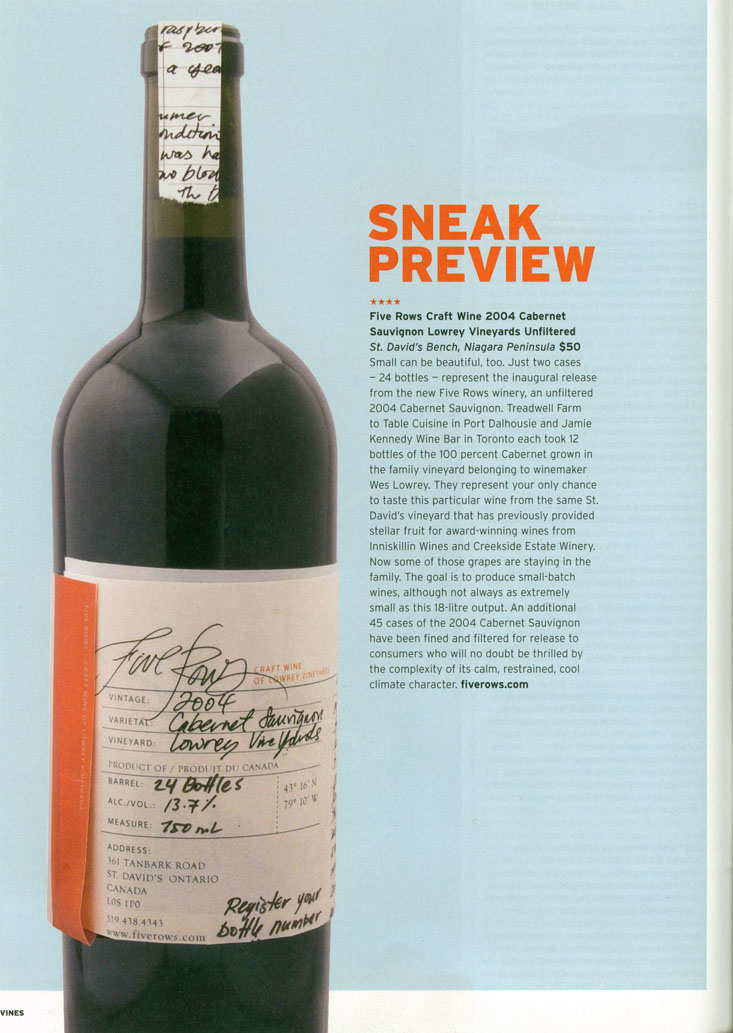
Our First Review! :  Check out the “Last Drop” column of the Jan/Feb edition of Vines Magazine (seen above) for a review of our 2004 Cabernet Sauvignon.

Harvest 2008 – Part One


Vintage ‘08 is upon us and to this point things have been…well…in a word …WET!!  Enough rain already.  I mean just when I thought we were in the clear we got doused by the remnants of a hurricane, and for the record: I don’t like Ike. Thankfully, the last couple of weeks have more than made up for the rain, with plenty of sunshine and perfect ripening conditions for the early varietals.

As per usual, the “Heartbreak Grape”, Pinot Noir, lived up to its moniker and provided lots of nervous moments and second guessing.  In fact, one day in the vineyard while pondering a harvest timing decision, I found myself singing aloud to the Clash hit “Should I Stay or Should I Go”.  The Pinot were clean but slightly underripe, with threatening weather on the horizon (“If I go there will be trouble / And if I stay it will be double”).  Ultimately, we decided not to pick and wait out what suddenly became Hurricane Ike.  All the water led to some berries actually splitting and roused us into action.  Led by a Pinot-loving mother hell-bent on saving her crop, the three of us spent two mind-numbing days cutting out individually split berries and underripe clusters.  On September 16th and 17th we finally hand-picked our first two tonnes of fruit.  In the end, what came in was ripe, clean (thus receiving the Wilma stamp of approval) and fermented into some really intriguing stuff.  I experimented with a new yeast strain this season called W15, which after pressing today, is the early favourite to put into our 2 new Sirugue barrels.

The whites, Pinot Gris and Sauvignon Blanc, are happily fermenting in the cold room of our barn as I write this.  I decided to add a single barrel ferment to the Pinot Gris regime this year, in an attempt to add a bit more complexity and refined mouthfeel to the final blend.  The majority will still be fermented in stainless steel because it worked so well last season.   From “the never do that again” file, we actually bottled our 2007 Sauvignon Blanc and Pinot Gris between the days we picked the 2008 crops of each varietal.  Any winery employee will profess that harvesting and bottling are not meant to intermingle, but sometimes you just have to make room for the new stuff.  The ’07 whites will be a part of our initial release slated for the beginning of November.

The Shiraz and Cabernet Sauvignon are still hanging strong and starting to pick up sugar and enhanced flavours on a daily basis.  I’ll keep you posted as the rest of Vintage ‘08 unfolds.  Better yet, stop by for a chat and taste a few berries yourself!

An undeniable (and at times dangerous) passion


My vineyard and wine philosophies will become clear over the course of these entries, but I stress that at my core I have a passion for what I do.  This passion is anchored in the same sense of place that I hope to share in my wines.

For those interested in a similar path, I caution that at different times this passion has led to:  tears, vinegar, “tractor ear” or selective hearing, the love of diesel fumes, a strange desire to talk to grapevines, the ability to hum the Weather Network theme, and occasional doubts of sanity.  Most disturbingly, however, growing up on a grape farm has left me scarred for life with a chronic case of separation anxiety.  My first failed attempt to leave the vineyard was four blurry years at the University of Guelph spent grinding out an honours degree in Microbiology.  Over that time I became enamoured with yeast and fermentation dynamics, skills that would later come in handy as I ended up back home (surprise) completing a Masters degree in Viticulture at Brock University.

A second attempt at leaving home brought me to the “sunny” shores of Wolfville, Nova Scotia to run a small winery called Blomidon Estate.  It was an amazing experience that thrust me into the challenging world of marketing and selling wine, while at the same time allowing me to hone my fledgling winemaking skills.  After three rewarding vintages, I knew the time was right to return home to good old St. Davids and get to work on my new wine vision.

I relish the opportunity to finally craft wines from our own fruit.  The goal is to let these wines give you a sense of place by showcasing our unique St. David’s Bench terroir.   Individual varietals will be the focus:  Pinot Noir, Cabernet Sauvignon, Shiraz, Pinot Gris and Sauvignon Blanc.  That way I can really capture the subtle characters of each variety, and provide those interested with an appellation education in every bottle.

My Legacy


Over the coming weeks and months I hope to provide you with a raw, uncensored look at the travails and joys associated with opening a small, craft winery.  Am I crazy?  Perhaps. In fact, some have suggested just that. I would argue, however, that it may be the only way to satisfy my burning desire to make small quantities of great wine from our storied family vineyard.

Our farm dates back five generations to the days of David Jackson Lowrey, who planted Niagara’s first commercial vineyard in the late 1800s.   Fast forward four generations to today and you’ll find my two personal heroes still farming this land.  The vines have changed and the “tractors” don’t have legs anymore, but I’m sure my parents Howie and Wilma still worry about their crops the same way David Jackson did back in his day.  Each generation has had to adapt and evolve with the times, and I see this small winery as my opportunity to do the same.

My parents bought the farm, so to speak, from my grandparents back in the 1970s when it was planted mainly with old Labrusca and Hybrid grapevines, which were common in Niagara at the time.  My father and grandfather, the two Howards, worked as a formidable tandem to manage the farm, as my first vivid childhood memories can attest.

A sweeping grapevine pull-out program, prompted by the pending Free Trade agreement of the mid-80s, forced my parents to make many difficult and thankfully “wine-friendly” decisions.  Amid the worries of a future without vineyards, it was Karl Kaiser of Inniskillin Wines who suggested that our site would be perfectly suited for the hard to grow, vinifera grape varieties that were beginning to show promise in the Niagara Region.  So it was with skepticism and crossed fingers that we decided to plant five trial rows of Pinot Noir in 1987.  The rest, as they say, is history.  I can only hope that our new winery ensures that the farm is sustainable for generations to come.