Five Rows Launch

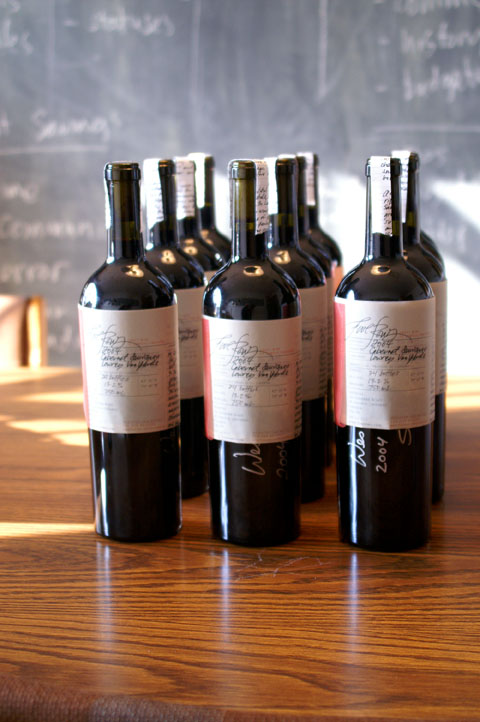
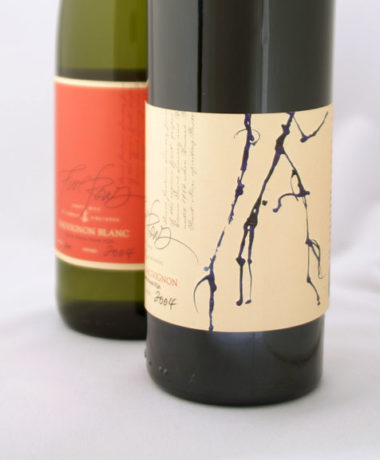
With great excitement we are pleased to announce that our long journey to a finished product is finally nearing completion.  Our first wines have passed VQA sensory and lab evaluations, and the labels have gone to press.  We are now accepting orders for our Five Rows 2004 Cabernet Sauvignon, 2007 Pinot Gris and 2007 Sauvignon Blanc.  These wines will all be available in special 6-bottle case allotments, with red wines retailing for $300/case and whites $150/case.  We hope to have a short run of labels in hand soon, however getting labeled wines to customers pre-Christmas might prove to be a little challenging.  I assure we will do our best to get orders out as expediently as possible, even if it means fashioning some temporary labels with markers and duct tape.  Please call us at 905-262-5113 or email wes@fiverows.com with any orders or queries.

2007 Five Rows Sauvignon Blanc

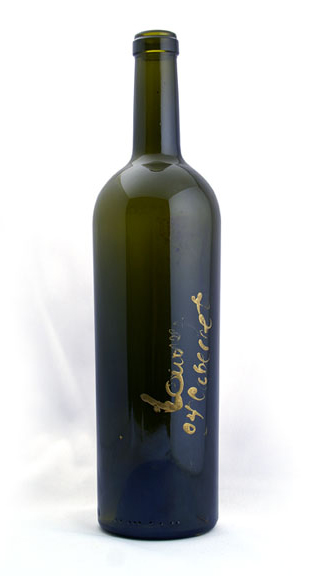
Like other varietals in the Lowrey Vineyard, my parents planted Sauvignon Blanc Clone 297 in separate years and in varying soil profiles to help add complexity to Creekside Estate Winery’s portfolio of wines.  Clone 297 has proven to be anything but “farmer-friendly” with a weird combination of extremely low winter hardiness and eye-popping vine vigour.   However, when the winter co-operates and the vines are tended aggressively – great wines can be achieved.  2007 was that Vintage.  Older French Oak barrels (2003 & 2005 Berthomieu) were used to ferment this Sauvignon Blanc.  Following treatment with a pectinase enzyme, one barrel was fermented wild and the other with BA11.   The yeast mix seemed to pull different aromatics and flavours from each batch with the wild being more tropical, and the BA11 bringing more citrus notes.  47 cases were bottled Sept 25, 2008.  This Sauvignon Blanc was bottled untraditionally in stretch hock glass because…well…that’s what we had!

2007 Five Rows Pinot Gris

The warm, dry Vintage of 2007 taught me an important lesson in Pinot Gris ripening.  In early September, my wife and I decided to take a pre-harvest “recharging” trip to New York to see Broken Social Scene play at McCarren Park Pool in Brooklyn.  When we left, the Pinot Gris looked and tasted great with tiny berries, intense flavours and bountiful acidity.  Upon returning three days later on Sept 10th, I nonchalantly grabbed a berry sample of the Gris, and to my astonishment it was showing a sugar level of 24.4 Degrees Brix and a Titratable Acidity (TA) of 6.5 g/L!   The TA was taking a nosedive, and if we had decided to stay any longer in NYC I might have missed these perfect winemaking parameters!  I hesitantly concede that there won’t be any more early September vacations for me.  The quick decision was made to pick our roughly one tonne of Pinot Gris later that afternoon.  The ferment was established in a stainless steel tank with a yeast strain called R2 that is renowned for long, cold ferments and great varietal character development.  Over the next four weeks, the wine slowly chugged away while I occasionally stirred the lees to add some mouthfeel and complexity.  I decided to stop the ferment at a specific gravity of 0.998 to leave the wine with a touch of residual sugar.  38 cases were bottled Sept 25, 2008.
Podcast & 2004 Cab Notes


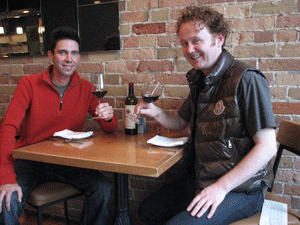
A couple of weeks ago I was flattered to be asked to participate in a podcast interview with Sommelier Jamie Drummond of the Jamie Kennedy Wine Bar in conjunction with our upcoming limited release.  I have to say that I was pretty nervous going in, but Jamie’s easygoing style and the comfortable restaurant atmosphere really put me at ease, to the point where I didn’t even realize we were being recorded.  It was truly a pleasure to discuss such a broad array of topics with someone as knowledgeable and genuinely interested as Jamie.  You can hear the podcast interview at:   http://www.jamiekennedy.ca/v1/welcome.html

2004  FIVE ROWS  CABERNET SAUVIGNON:

A wet summer gave way to a beautiful fall and great ripening conditions for the late varietals.  This Cabernet Sauvignon was harvested on November 4, 2004.   The Lowrey Cab Sauv is grown in two blocks which differ in vine age, clone, and soil profile.  The older block is a mix of clones 337, 339 and 15, while the younger block is planted solely with clone 169.  All vines are grafted onto low vigour rootstock 3309.  Approximately 10 tonnes of fruit were picked that day, at an average of 21.5 degrees brix.  Characteristically the older fruit gives the resulting wines structure and balance while the clone 169 block provides the ripe fruit notes.

The resulting fruit was processed in small batches with three daily punchdowns for maximum colour extraction.  The wine was left on the skins to macerate following fermentation to help with tannin structure. The cooperage was primarily French (75%) and mainly older barrels (only 20% new oak).  Overall time spent in barrel was 30 months.  The wine for my blend was selected following an intensive barrel selection process where I actually pulled different volumes from a variety of barrels to compose my final 2 barrel blend.  The majority of the blend (300L) came from two 2002 Gillet barrels that showcased good overall components of oak integration, aromatics and palate structure.  The other 150L came from a new 2004 Taransaud barrel that featured amazing ripeness and notes of candied cherry and raspberry.   This wine was bottled in the summer of 2007 and allowed to age gracefully in bottle for a year and a half before this release.
Cases: 45 Filtered & 2 Unfiltered
TA: 6.60g/L
pH: 3.67
Alcohol: 13.2%

An opportunity to try our wines.


Many of you have expressed interest in trying our wines and I can now announce some exciting news to that end.  We’ve decided to launch a limited, unfiltered version of our 2004 Cabernet Sauvignon in two special restaurants:  Treadwell’s in Port Dalhousie and Jamie Kennedy Wine Bar in Toronto.   After two great tastings with sommeliers James Treadwell (Treadwell’s) and Jamie Drummond & Krista Brodhurst  (Jamie Kennedy), it became apparent that we all shared a similar passion for viticulturally-focused craft wine.  I was pleased to hear that they understand the amount of work it takes to produce small lots of wine from heavily thinned crops.  The sacrifice of quantity for quality is not friendly to the winery or vineyard bottom line, unless the resultant wines merit being sold in the Ultra-premium sector of the market.  My meetings with these sommeliers gave me the confidence that we are proceeding in the right direction with our brand, and that all the risk and hard work will be worth it in the end.

Within the next couple of weeks, each restaurant will be allotted 12 bottles of the Unfiltered Cab featuring a limited edition label complete with detailed viticulture and winery notes.  I can’t wait for your feedback.

www.treadwellcuisine.com

www.jamiekennedy.ca

’04 and ’05 Cabernet Sauvignon Tasting

The bottle you see above is one of a lot of two barrels of 2004 Cabernet Sauvignon, 100% sourced from Lowrey Vineyards.  It was bottled last summer following two anxious years of aging in older French oak barrels.  That lot is very special to us because it represents the first wine we will release under our yet-to-be-named winery label.

A couple of weeks ago, we bottled our 2005 Cabernet Sauvignon after a similar aging period in a somewhat different barrel regimen.  The two barrels of ‘05s were initially aged in older Frenchies like the ’04s.  After an initial tasting of the ‘05s, I surmised that adding an American oak barrel to the mix after the second racking (12 months in) would help frame the slightly bigger tannins and bolder overall mouthfeel.

It was one recent evening on our annual trip to Bobcaygeon that I decided to recruit some unbiased family palates to conduct our first ever cross-vintage wine tasting.  Exciting stuff!  After nervously setting up the blind tasting, I was intrigued to watch my father skip the aromatic profile altogether, swig back the wine and conclude that “It tastes good.”  The more sophisticated family members assured me that both wines showed well and I was impressed that some were even able to recognize the subtle differences between vintages.  Thanks guys!

Look for the ‘04s sometime soon and the ‘05s early next year after some quality time in bottle.