2009 Cabernet Sauvignon Icewine Release


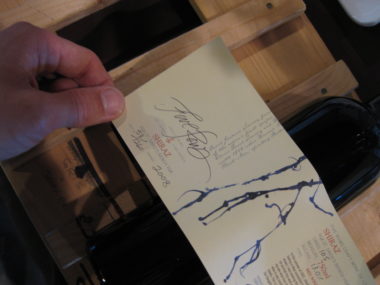
As winter draws near, it’s fitting that our 2009 Cabernet Sauvignon Icewine is finally ready for release.  The bottles are signed, the labels have been folded and the wine is drinking beautifully!

Excitingly, we were just informed that this wine has received a silver medal in the Icewine category at the 2011 Canadian Wine Awards.  Full results will be made public in the December issue of Wine Access.  I must admit that this was not an easy wine to make (it drew my ire on many occasions) and to be recognized in this manner is especially gratifying.
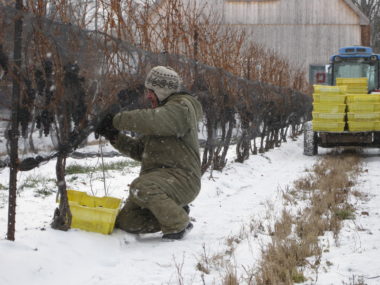
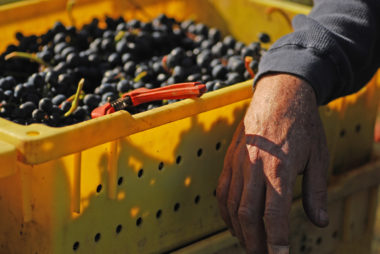
I remember the day we harvested this fruit very fondly.  After an evening of perfect freezing conditions (-12 degrees Celsius) it was decided that we would hand pick five rows of specially selected Clone 169 Cabernet Sauvignon.  A beautiful day unfolded before us, with a light snow gently filtering the weak rays of winter sun.  Having spent the last three months fending off voracious flocks of starlings, the relief of harvesting was palpable that morning, and probably helped us brave the cold.

I quickly learned that everything involved in Icewine production is slow and difficult.  Pressing was a very long and drawn out process, but we were thankful for each singular drop of juice that slowly dangled and fell from the press spout.  The fermentation was also a marathon, as yeast don’t normally take kindly to such extreme conditions.  Proper nutrition and attention to fermentation dynamics were of the utmost importance.  Slowly but surely the sugar became alcohol and the amazing Icewine flavours began to reveal themselves.  The goal was to produce an Icewine that would not be perceived as being “too sweet” and I think we achieved that.
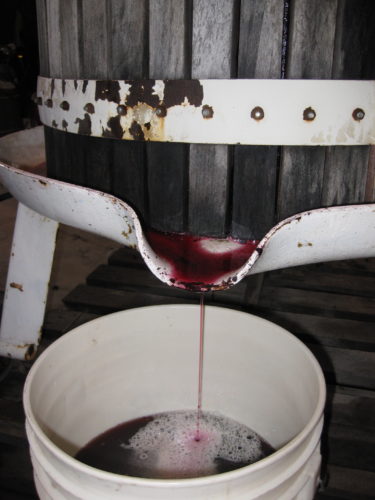
The challenge continued when it came to filtering and bottling this lucious, thick liquid.  In fact, it required as many pads to filter this measly 270L as I used for the rest of my entire 2009 vintage!  Bottling into narrow 200ml glass was a treat as well.  First the corks wouldn’t fit properly, then the bottles started tipping over on the filling line.  Keep in mind that any spillage of icewine is magnified many times simply due to it’s scarce supply.

Perhaps the easiest and most enjoyable part of this wine was the label design.  It’s a fun process and I’m always impressed with the original concepts that are born on the magic blackboard at Insite Design.  They always seem to come up with ways to make my wines feel special.  For a sneak peek at the package concept of this wine click here.

Many times over the course of this Icewine experiment I promised myself that under no circumstances would I ever do this again.  Based on the tremendous response to this wine, however,  I may now have to eat crow and reconsider.

Sometimes crow tastes good.
 

2008 Five Rows Pinot Noir Vinification Notes

2008 Five Rows Pinot Noir:

Now that we’ve been at this venture for a few years, it’s interesting to look back at my old blog entries upon the release of a new wine.  This entry from October 6, 2008 aptly tells the story of our 2008 Pinot Noir:

“Vintage ‘08 is upon us and to this point things have been…well…in a word …WET!!  Enough rain already.  I mean just when I thought we were in the clear we got doused by the remnants of a hurricane, and for the record: I don’t like Ike. Thankfully, the last couple of weeks have more than made up for the rain, with plenty of sunshine and perfect ripening conditions for the early varietals.

As per usual, the “Heartbreak Grape”, Pinot Noir, lived up to its moniker and provided lots of nervous moments and second guessing.  In fact, one day in the vineyard while pondering a harvest timing decision, I found myself singing aloud to the Clash hit “Should I Stay or Should I Go”.  The Pinot were clean but slightly underripe, with threatening weather on the horizon (“If I go there will be trouble / And if I stay it will be double”).  Ultimately, we decided not to pick and wait out what suddenly became Hurricane Ike.  All the water led to some berries actually splitting and roused us into action.  Led by a Pinot-loving mother hell-bent on saving her crop, the three of us spent two mind-numbing days cutting out individually split berries and underripe clusters.  On September 16th and 17th we finally hand-picked our first two tonnes of fruit.  In the end, what came in was ripe, clean (thus receiving the Wilma stamp of approval) and fermented into some really intriguing stuff.  I experimented with a new yeast strain this season called W15, which after pressing today, is the early favourite to put into our 2 new Sirugue barrels.”

Fast-forward to 2011 and that Pinot-loving mother can be proud of the wine she helped save.  The 2008 is reminiscent of many past wines featuring Lowrey Pinot.  A classic blend of bright cherry fruit, some floral notes and spice dominate the nose.  Flavours of black raspberry and vanilla bean resolve into a pleasingly soft mouthfeel.  Tannins are much more approachable than the 2007 Five Rows Pinot Noir at the same stage.

Technical Data: 12.6% alcohol,  5.4 g/L residual sugar,  pH 3.45

Price:  $50/bottle

Barrels: 5

Production: 106 cases

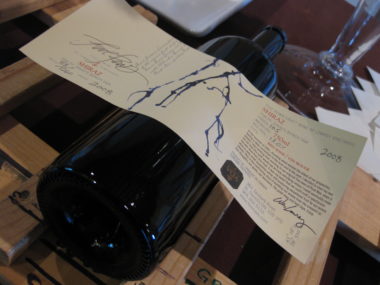
2008 Five Rows Shiraz Vinification Notes

2008 Five Rows Shiraz:

The tale of Lowrey Shiraz began many years ago with a firm handshake.  Our relationship as a grower for Creekside Estate Winery started in the late 90’s and continues to this day.  Shiraz is a staple for Creekside, grown and vinified to perfection year after year.  Given this success, we naively agreed to plant some of these vines soon after our partnership began.  Little did we know just how sensitive and vigorous Shiraz could be!

This combination of winter sensitivity and summertime vigor is a challenging prospect for the grape grower.  Early in their lives, these vines saw some pretty severe winters that almost led to their extinction in our vineyard.  Massive re-plantings and constant re-trunking were needed to restore their numbers.  Our hard work and patience was rewarded with some stellar vintages in the 2000s, ultimately inspiring me to take a crack at making my own Shiraz in 2008 (and yes, it will always be “Shiraz” not “Syrah” to us because we planted it for an Aussie!).

The fruit for this wine was harvested on October 23 following some pretty dodgy conditions in the summer of 2008.  We initially thinned the vines down to two bunches per shoot, but had to remove additional clusters in the fall, as it became clear that ripening would be a challenge.  We hand-harvested about one tonne of fruit from each of our Shiraz clones (7 & 100), then sorted before de-stemming into fermentation bins.

A long cold soak was employed to help with colour extraction and tannic development.  I chose to ferment the slightly riper Clone 7 fruit with RX60 yeast, but opted for F15 with the Clone 100 bin.  Ferments were carried out at an average pace, with four daily punch-downs.

One new Taransaud barrel, two older French and a lone American oak barrel were used for the maturation process of this wine.  Malolactic fermentation was carried out in barrel.  After 24 months in oak, the final blend was assembled and allowed to mingle for about 8 more months.  This exciting wine was bottled April 6th, 2011.

Aromas:  blackberry, black currant, lavender, smoked game

Flavours:  dark chocolate, coffee bean, raspberry

Production:  105 cases

Technical data:  13.0% alcohol,  pH 3.30,  TA 8.55

Price:  $50.00/bottle

Come One, Come All


As we head into the summer season, I would once again like to extend an open invitation to all wine lovers.  Please do join us for a tasting over the coming months during our weekend retail hours (11-5).  It’s an exciting time at Five Rows, as we’ve just released our 2008 Shiraz, 2008 Pinot Noir, 2010 Sauvignon Blanc and 2010 Pinot Gris.  The weekend barn traffic has ramped up dramatically in recent weeks and there has been a very positive response to our new products.  Anyone wishing to reserve a case, please call or email sometime soon.  History has shown us that these wines will not be around very long!


2009 Whites

2009 Five Rows Sauvignon Blanc:

Roughly one tonne of fruit was harvested on a beautiful day in early October of 2009.  Half the fruit was sourced from our younger, more clay-based block of  Sauvignon Blanc, while the other half came from the older vines located in predominantly clay-loam soil.  Each block contributes distinct characters to the final blend.

The younger “clay” block tends to be less vigorous, leading to increased fruit exposure and consequently lends the riper, more tropical notes to the blend.  The older “clay-loam” block vines are extremely vigorous and require more intense hand labour.  Generally they are slightly more shaded, leading to the fresh citrus aromatics and crisp flavours that are classic characteristics of cool-climate Sauvignon Blanc.

As I mentioned last season, the key to achieving the full complement of flavours and aromas is a long, cool ferment carried out in a combination of older French oak barrels and stainless steel tanks.  For this wine I opted to go with a two-thirds barrel (2003 Jacques Garnier) and one-third tank fermentation regimen. The tank-fermented portion was allowed to age in oak for a few months prior to final blending.  All fermentations were carried out at around 13 degrees Celsius with X5 yeast.  68 cases were bottled on August 31, 2010.

Aromas:  vanilla, pineapple, lemon, lime

Flavours:  melon, lime, balanced finish

Technical data:  13.1% alcohol, 5.8 g/L residual sugar, pH 3.2

Price: $25/bottle

Production:  68 cases

2009 Five Rows Pinot Gris:

Pinot Gris is quickly becoming a standout varietal in the Niagara Peninsula.   Rick VanSickle recently wrote about this trend and chronicled a tasting of 17 different Pinot Gris.  Rick was kind enough to purchase a bottle of our Five Rows Pinot Gris to include in the tasting and you can read the exciting review here.

My view is that Pinot Gris is such a labour intensive variety to grow, it better damn well turn out to be a good wine!  It would not be worth the extra hand work and stressful pre-harvest nail biting to produce a mediocre, uninteresting wine.  “Good” Pinot Gris is without a doubt the most sought-after grape variety by premium Niagara wine producers at the moment.  It even has enough clout to be used as a bargaining tool by many growers to help them unload their lesser in demand, easier to grow varieties like Chardonnay and Cabernet Franc.

As is evident in Rick’s article, getting good fruit is only part of the equation.  Each winemaker seems to have their own method of coaxing out the best in their Gris.  A few years back, a couple of wise Creekside winemakers introduced me to the benefits of fermenting a portion of Pinot Gris in older French oak barrels.  I’ve experimented with different oak/stainless blends ever since.  The barrel-fermented wine always seems to have weightier mouthfeel and more complex aromatics, so in 2009 I decided to go with a 2/3 barrel, 1/3 tank final blend.  I’ve always had good luck with a yeast called R2, so I stuck with it and fermented at the coldest temperature the yeast could tolerate.  This led to a slow and beautiful month-long ferment.  70 cases were bottled on August 31, 2010.

Aromas:  honey, apple, pear

Flavours:  vanilla, melon, spice, left slightly off-dry (1)

Technical Data:  13.0% alcohol, 8.5 g/L residual sugar, pH 3.46

Price:  $25/bottle

Production:  70 cases

Both of these wines are now available for purchase at our winery, on our website or can be enjoyed at select licensees.  We are happy to announce the addition of two new members to the Five Rows extended family:  Ruby Watchco in Toronto and Brookstreet in Ottawa!  Ruby Watchco will be carrying our 2007 Cabernet Sauvignon and 2009 Pinot Gris while Brookstreet will be pouring our 2007 Pinot Noir and 2009 Pinot Gris.

2007 Cabernet Sauvignon

I want to personally thank all the people who made the trek to our first ever Customer Appreciation Weekend!  It was great to catch up with those we hadn’t seen in a while and also meet some new friends along the way.  We decided to give people a sneak preview of upcoming Five Rows releases including the 2007 Pinot Noir and 2007 Cabernet Sauvignon.  After some gentle prodding, it was decided to also tap into some promising tank samples of our 2008 Shiraz and 2009 Riesling.  I sincerely appreciate all the constructive feedback.

We are now filling orders for the 2007 Pinot Noir, so you’re welcome to pick up your pre-ordered case if you haven’t already done so.  The 2007 Cab Sauv also generated a lot of interest over the weekend, so I now feel confident releasing this wine for sale.

2007 Five Rows Cabernet Sauvignon

Vinification Notes:

My third crack at crafting a single-varietal Cabernet Sauvignon sourced from our own vineyard was by far the least stressful to date.  We hand picked just under a tonne (900kg) of ripe, clean fruit on October 25th, 2007.  This harvest date really snuck up on us, as we hadn’t really anticipated the Cab being that ripe, that early.  For growers of multiple grape varietals, harvest time is a crazy sprint from the first Pinot’s of mid-September to the last of the Cab Sauv in November.  To pick ripe Cab in October is a luxury we are rarely afforded.

Normally a row of Cabernet Sauvignon in our vineyard would yield about 500kg of fruit, but the 4 rows we sourced for this wine were thinned down to one bunch per shoot resulting in a yield of 225kg/row.  The fruit came in like sweet little black marbles, at a shade under 24 degrees brix.  After processing and a brief cold soak, the fruit was warmed back up for fermentation.  I decided to use Zymaflore F15 yeast for this wine to maximize glycerolic production.  I figured this would be a big wine from the get-go, so any added elements to help round out the mouthfeel would eventually pay dividends.  Fermentation was carried out at a nice moderate pace over 7 days, with peak temperature of 26.8 degrees Celsius.  Malolactic fermentation was completed in barrel to aid in oak integration.

After 24 months in one old and one new French oak barrel, this wine was blended to a stainless steel tank for final settling.  50 cases were eventually bottled on February 18, 2010.  My only regret at the end of this process is that I didn’t have the foresight to make more Cabernet Sauvignon form this superb vintage.

Aromas:  blueberry pie, black cherry, mint, oak spice, red licorice

Flavours:  raspberry, blueberry, dark chocolate, powerful length

Cellaring:  Drinking well now, but should age gracefully for 20+ years

Price: $50 / bottle

2007 Pinot Noir Vinification Notes

2007 Five Rows Pinot Noir

Vinification Notes:

The hot summer of 2007 brought ideal picking conditions to the St. David’s Bench.  Roughly three tonnes of Pinot Noir were hand-picked on September 23 at just under 22 degrees brix, having TA of 6.55 and pH 3.31.  Prior to picking, seed and skin tannins were both showing excellent maturity, and flavours were reminiscent of ripe seasons past (1998, 2001).

It was decided to source equal amounts of fruit from the three Lowrey Pinot blocks of differing ages (20 years, 15 years and 10 years).  Each block was processed into open-top fermentors, with 15% of the fruit being left as whole-bunch.  Bins were then sealed and underwent a lengthy cold soak to promote extraction.

Ferments were generally quick and warm, with peak temperatures in the low 30s.  The wines were pressed into five French oak barrels (2 new, 3 old). Malolactic fermentation was carried out over the next few weeks in barrel.

After about a year of aging, it was apparent that the 2007 reds packed a real punch in both flavour and tannin.  To mellow the mouthfeel, it was decided after bench-top trials to fine the wines with small volumes of Pinot Gris lees from the 2008 vintage.  Following a few days settling, the wines were racked off all lees.

24 months and countless blending trials later, the final cut was married together in a stainless steel tank for final settling and stabilization.  99 cases of this wine were bottled on February 18, 2010.

Aromas:  cherry, strawberry, raspberry, earth, and faint tobacco leaf

Palate:  flavours of luscious black cherry, great balance, and ample tannin for optimal aging potential

Price: $50 / bottle.  Your order can be directed to wines@fiverows.com.

At Long Last


Since deciding to start a winery, the question I get asked most is, “so when is the Pinot going to be ready?”.  I’ve stalled and tap-danced around the answer for about a year now, but not any longer.

Twenty-three years ago, five unassuming rows of Burgundian Clone 115 Pinot Noir were planted by a skeptical crew of individuals amid concerns about the future of a seemingly faltering grape and wine industry.  Would these vines even live to produce a crop?  Only time would tell.

No doubt my eagle-eye grandfather drove the tractor that fateful day, as this most important job meant the difference between straight and crooked rows.  To this day I’m amazed at his accuracy each time I gaze down a row in that vineyard.  The unsung heroes of the operation were the two women perched precipitously upon the planter as it was tugged violently behind the tractor.  My Mother and Aunt Pat were responsible for placing the young vines into the freshly harrowed trench at consistent intervals, all the while being tossed about on their cast iron seats.  Timing is everything, as vines planted too close together or too far apart can create a trellising nightmare (by the way, this is all done with laser and GPS nowadays).  I’m sure they were made well aware if any of the vines looked a little out of place!  Trudging along solemnly behind the operation was my Father, personally tamping and straightening each vine.  Did he have an inkling that one day I’d be writing about this?  Probably not.  At the time he didn’t know a Pinot from his elbow, so most likely he would have laughed at the thought of his young son as a blog-writing winemaker.  His deep connection to these original vines was evident in recent years when I saw him conspicuously wipe away few tears as we uprooted out some old, grisled vines that didn’t make it through winter.  Maybe it was just something in his eye.

Ironically, the rough clay-loam and limestone soil being cursed by the planters that day ultimately proved to be a key factor in the future success of these vines.  From the first wines made out of this fruit, it was apparent that the enigmatic effects of Terroir could be applied to this small patch of land in St. Davids.  The Reserve Pinot Noir produced by Inniskillin in the early 90s was much sought after and helped to elevate the image of Niagara wines as a whole.  The success of this Pinot spawned a collaboration project between Inniskillin and a counterpart in Burgundy.  Their goal was to produce a Niagara Pinot Noir that could stack up with the finest Grand Cru.  French Negotiant Bernard Repolt of Jaffelin was commissioned to select barrels from the Inniskillin portfolio that best represented the beloved wines of his homeland.  After an exhaustive search that involved physically tasting soil (“mmm….loamy”) from the vineyard origin of each barrel, he and Inniskillin winemaker Karl Kaiser worked in tandem to come up with a final blend.   These critically acclaimed “Alliance” wines sold out lightning fast and really helped put Inniskillin on the map.  The fact they ended up choosing Lowrey barrels for the project dramatically changed the focus of our farm and probably had a lot to do with my future choice to become a winemaker.  From that point on we weren’t growing grapes, we were growing wines.

Crafting my 2007 Pinot Noir from these same five rows was an exciting process that really brought things full circle.  There were plenty of anxious moments, but earlier this year as the wine went into bottle I felt a certain catharsis, knowing there was nothing more for me to do.  I have 99 cases of this wine and plan to release it early this summer.  If you are interested in reserving a six-bottle case ($300) please let me know soon (wes@fiverows.com).  In an effort to maximize distribution I must limit orders to 2 cases.

I’ll follow up with tasting notes and cellar details of this wine closer to the release date.

2008 Sauvignon Blanc

2008 Sauvignon Blanc:

Crafting aromatic white wines requires good fruit, patience and above all temperature control!  In small wineries like ours we aren’t afforded the luxury of temperature-controlled tanks to aid in maintaining the ideal fermentation conditions.   Instead, my barrels of 2008 Sauv Blanc went on a merry-go-round tour of our barn for about a month until ferment was over.  First outside to settle after pressing, then inside to warm for yeast inoculation, quickly into the cold room as the the ferment really starts to rock, back out of the cold room to finish-up as yeast start to become stressed, finally back into cold room at 4 Celsius to stop ferment at the desired sugar-acid balance.

I decided to use a yeast called X5 for this wine because it boasts to “help reveal varietal aromas rich in citrus, boxtree and tropical fruit while contributing light fresh floral notes”.  In the early stages it was apparent that X5 was the right choice.   I was impressed with the  lychee and pineapple aromatics that got stronger with each successive day.  There was still some classic cool-climate Sauv Blanc citrus (lime zest) detectable as well, with hints of vanilla, fig and flint.  The use of older French oak barrels was most evident on the palate, softening the edges of this zesty wine. Bottled on September 14th, 2009.

Cases: 64                   Alcohol:  12.0%              Price: $25/bottle

New Release Update


With harvest approaching quicker than I’d like, the pressure is on to clear the tanks and make room for the 2009’s.  I can now report that our 2008 Sauvignon Blanc and Pinot Gris will be bottled on September 14th, making the tentative release date around September 28th. Generally, I like to let the wines adjust to life in bottle for a couple of weeks prior to release, just to make sure they get all their kicking and screaming out.

In related news, we’re down to the last few cases of 2004 Cabernet Sauvignon and 2007 Sauvignon Blanc, so the timing of this release should work out just about right.  After 18 long months spent maturing in bottle, our 2005 Cab Sauv is drinking well and ready to debut alongside the 2008 whites.

It occurs to me that we’ve never really had a “Grand Opening” for our winery, and I guess that’s just not our style.  Instead, we’ve decided to celebrate our new release with all the people who have generously supported us since our inception.  We’ll be emailing the details of this intimate event to those on our mailing list in the coming weeks, so keep an eye on your inbox!

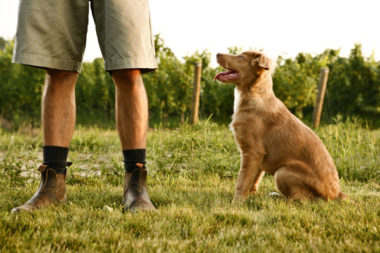
Lucy patiently awaits the New Release…