Monday, May 16th, 2011
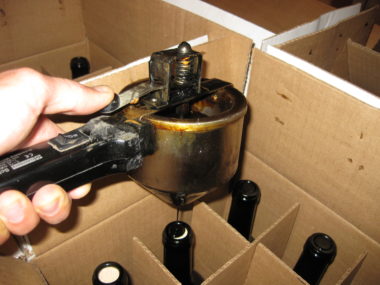
Hot Wax Meets Cool Climate Shiraz.

Hot Wax Meets Cool Climate Shiraz.

Our 2008 Pinot Gris joined some exclusive company recently with its inclusion on a special year end list. You can read about it here.
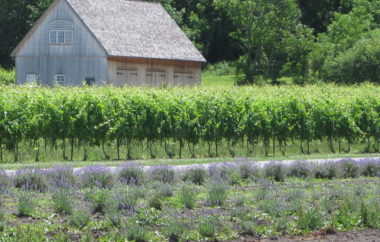
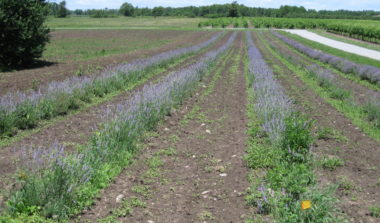
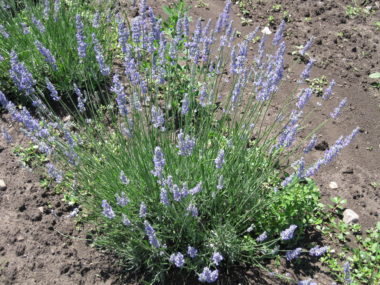
Wilma’s Five Rows of Lavender


Finally…some quality time with Lucy!

I get a chuckle when I look at how much she’s changed over her first nine months of life. Here is the pictorial evidence.


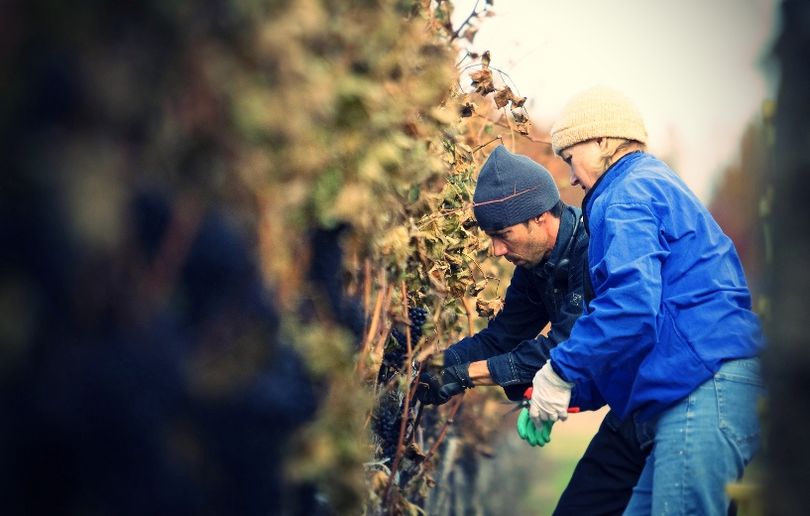
At 8:03 AM on January 2nd, a new era began at Lowrey Vineyards. As the sun peeked over the escarpment we welcomed the dawn of our very own “Ice Age”. After an evening of perfect freezing conditions (-12 degrees Celsius) it was decided to harvest five rows of Cabernet Sauvignon, our first foray into the world of Icewine. A beautiful morning unfolded before us, with a light snow gently filtering the weak rays of winter sun. It soon became clear that picking the fruit and braving the cold are the easy part, and actually quite enjoyable.
To understand the travails of pressing frozen grapes to yield minute amounts of juice, I want you to imagine trying to squeeze a tray of ice cubes in an effort to produce water. It takes equal amounts of pressure and patience I assure you! Too much of the former and not enough of the latter can lead to problems…big problems. Less than a minute into the second press load I cranked up the pressure and was horrified to hear the sickening hiss of a slow leak in the press bladder. Luckily we had a back-up bladder on hand, but the subsequent dismantling of the press load and bladder re-assembly really set us back. In the end, patience prevailed and the luscious Cab juice began to flow. It was thick, sweet and full of super-concentrated flavours of ripe strawberry and raspberry.
At this stage the plan is to make a traditional Icewine, but I could be persuaded to ferment it a little longer for those seeking more of a drier, “late harvest” style. Initial feedback tells me that Icewine is often perceived as being “too sweet” for some palates (including mine at times), but I challenge those people to try Cabernet Sauvignon or Cabernet Franc Icewine with dark chocolate or strong cheeses. Simply delectable!

Anyone who has been traumatized by the Hitchcock classic “The Birds” would understand the chills that are currently inhabiting my spine. As our first Pinot berries start to turn colour, so return the first starlings to terrorize my parents and I for the next three months.
Like the movie, our bird conundrum always starts with a few nosy stragglers and quickly advances to throngs of grape-thirsty beasts, hell-bent on vineyard devastation. On the front lines, my dad is our General Patton, always devising new schemes to divert the feathered assassins from their target. My mom is his trusty foot soldier, known to employ old fashioned yelling, clapping and even the banging of pots and pans in weaker moments.
I’m the net man. Through the years we’ve experimented with about every bird control technique ever invented, only to realize that the physical netting of the grapes is the only answer. It’s labour intensive, expensive and it works, plain and simple.
The problem with bird pecks is that it only takes one to spoil an entire bunch of grapes. So preventing these pecks and the subsequent rot is paramount to the success of tight-cluster varieties like Pinot Noir, Pinot Gris and Sauvignon Blanc. In our Pinot Noir we use a permanent netting system that is unfurled shortly after veraison and then gets rolled back up and stays in the vineyard after harvest in the fall. In the Pinot Gris we’ve opted for temporary netting that must be put up and taken down every year. It’s a little more work, but it should give us a more mileage out of the nets.
The bird pressure usually dies down once the early varieties are picked, but our guard is always up. Left unattended, we could potentially lose a significant portion of our crop. Yet another one of the pitfalls of growing grapes in Niagara!
Our weekend retail hours have proved to be an extremely positive experience. We’ve been able to forge some great relationships over the last couple of months that I’m sure will last for years to come. It’s so exciting to hear that people have enjoyed their visit to Five Rows. Tour Director and Sommelier Andrew Brooks (Crush on Niagara Wine Tours) recently had this to say in his latest web update:
“Wes Lowrey is another newcomer to release micro amounts of crafted wine. Wines are sold out of the barn on the charming grow site at the base of the St. David’s Bench (off York Road in Niagara on the Lake). Wes has a contagious enthusiasm that makes you want to sell your house, quit your job and plant a vineyard!”
One quick note: Our store will be closed on Sunday, July 19th for a previous family commitment. I do encourage you to come visit us any weekday, just give a quick call ahead to set up a time.
Today marks the next phase in our winery development. We have officially launched our Five Rows website at www.fiverows.com. This will be the hub of our winery operation. From this site you will be able to access my latest blog entries and also get info on all of current and upcoming releases. Excitingly, there is a page specifically designed to keep us connected with all those who have supported us through wine purchases. All customers are encouraged to record their name and bottle number on this page along with an optional comment on the wine or a story behind their connection to Five Rows.
We’ve received many inquiries as to where you can find our wines, so now the website will keep you posted to that end. You will also find a link to our Lowrey Vineyards site, a future showcase for the viticultural side of our operation.
Now that pruning is in full swing and somewhat under control, I finally have some time to devote to tying up a few loose ends in the winery. One of the challenges of sustaining a vineyard and winery operation of this size (ie. no other employees) is deciding which “hat” to wear on a daily basis. Luckily, my cellar work is fairly minimal at this time of year, with a main focus on protein and cold stabilization in the 2008 whites. I like to use bentonite to obtain protein stability, at a minimal rate, so as not to upset the delicate nature of these aromatic wines. Fining with too much bento can actually have the negative effect of binding and stripping flavour compounds as well as unwanted proteins.
Another important consideration at this time of year is to assess the entire inventory in an attempt to come up with a bottling and release plan for the coming season. Needless to say, this is a daunting task! At the completion of this all-encompassing tasting session, a couple of things became abundantly clear. The first being that the 2008 vintage is a lot more promising than many people touted at the outset, and the second is that our 2007 reds are not quite ready to unleash on the public. These wines are so youthful and intense that further time in barrel is a must in my opinion. From a winery sales perspective this creates a bit of a conundrum. Initially, my intention was to bottle these wines sometime early next summer and have them ready for the fall of 2009, but now I’m leaning towards pushing those dates back. I truly feel that it would be a disservice to these wines to release them prematurely, just to meet budgetary demands.
I’m of the opinion that for Niagara to make the next step on the world stage, we have to make a concerted effort to demonstrate the ageability of our premium wines. The temptation and current trend is to release wines too early, mainly out of cash flow necessity. It is my hope that doing things on a smaller scale will afford us the opportunity to wait for the right time to release, without too much disruption in our business plan. That is the precise reason we decided to make small lots of Cabernet Sauvignon in 2004 and 2005 - to buy time for this kind of scenario.
The good news is that the 2007’s have a chance to be something very special, and lets hope there are enough of them around at the peak of their existence to prove Niagara can age some great wines.